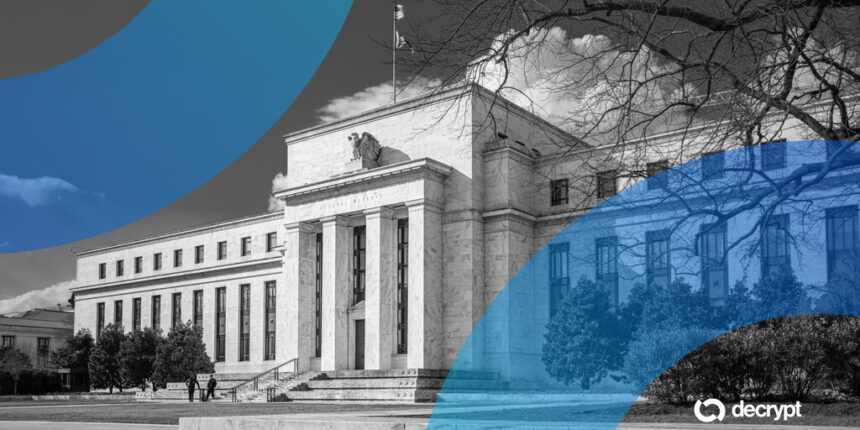
The Federal Reserve announced on Wednesday that it would keep its benchmark interest rate unchanged as policymakers continue to assess economic data and inflation trends, which have become increasingly complicated by geopolitical tensions in the Middle East. The central bank maintained the target range for the federal funds rate at 3.5% to 3.75%, marking the fourth time this year that officials have opted for a wait-and-see approach.
As the ongoing U.S.-Israeli conflict with Iran has strained global oil supplies, investors have begun bracing for potentially tighter monetary conditions, which could impact risk assets. However, the Fed’s decision comes against a backdrop of reported progress from both sides in the region.
In market reactions, Bitcoin, the largest digital asset by market capitalization, was trading at approximately $65,300 ahead of the Fed’s announcement but experienced a slight dip after the news. The cryptocurrency was down just over 1% for the day but remained up 5% over the past week. Other digital assets also showed positive trends, with Ethereum increasing by 7.6% to $1,763 and Solana appreciating 13% to $73 within the same seven-day span.
The Federal Open Market Committee (FOMC) characterized economic activity in the U.S. as “expanding at a solid pace,” despite the considerable uncertainty attributed to the Middle Eastern conflict and specific supply shocks, particularly in the energy sector. The remarks were notably concise regarding the Fed’s ongoing struggle to achieve its inflation target of 2%, explicitly stating, “The Committee will deliver price stability.”
Economic projections released quarterly suggested an increase in expectations for interest rate hikes this year, with the median forecast for the federal funds rate climbing to 3.8%, up from 3.4% in March, indicating a shift toward not planning to cut rates anytime soon. Concurrently, the Fed acknowledged the stability present in America’s labor market, following a previous report that showed job growth significantly exceeding economists’ expectations, stirring concerns about the potential for rising inflation.
This decision was the first under Fed Chair Kevin Warsh, who has faced significant challenges in assuming leadership of the central bank, particularly following President Trump’s pressure on his predecessor, Jerome Powell, to lower rates. Warsh’s nomination was also postponed while the Department of Justice conducted an investigation into Powell.
During a post-decision press conference, Warsh emphasized the Fed’s commitment to combating inflation, describing the committee’s dedication as “unambiguous and unanimous.” In conjunction with this commitment, Warsh unveiled the formation of five task forces focused on various critical areas, including improving communications, analyzing the Fed’s balance sheet, evaluating the impact of emerging technologies on productivity and jobs, and refining the central bank’s approach to inflation.
While the Fed maintained a unified stance on its recent decision, past sessions have revealed some divisions among leadership, with several committee members expressing dissent over interest rate changes since July. Despite these fractures, Wednesday’s move aligned with broader market expectations and contributed to elevated forecasts for a potential rate hike in July, with traders now estimating an 18% likelihood of that event occurring.