The Federal Reserve has opted to maintain interest rates in the range of 3.5% to 3.75% in a unanimous decision, a move that comes at a critical juncture for monetary policy both in the United States and globally. This decision reflects the committee’s cautious approach amid rising uncertainties, particularly stemming from international conflicts, including escalating tensions in the Middle East.
During the meeting, nine out of the 18 members of the Federal Open Market Committee (FOMC) indicated expectations for a potential rate increase later this year, which contributed to a pullback in stock markets following the announcement.
In the official statement regarding the decision, the Fed noted that “economic activity is expanding at a solid pace,” despite the current heightened levels of uncertainty surrounding geopolitical events. It highlighted strong productivity growth and robust capital investment. The statement also noted a steady jobs market, with job gains in alignment with workforce growth and minimal changes in the unemployment rate.
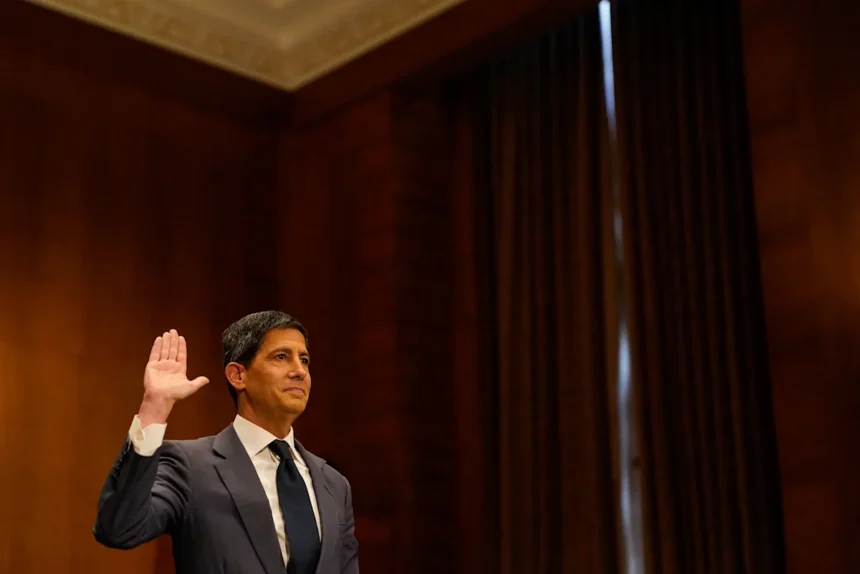
This meeting marks the first under newly appointed Chair Kevin Warsh, who previously indicated intentions to adopt a different leadership style compared to his predecessor, Jerome Powell. Warsh’s approach appears to be influenced by former Fed Chair Alan Greenspan’s strategies. Interestingly, Warsh has not committed to holding press conferences after each monetary policy meeting—a practice that Powell initiated to enhance transparency—though a press conference is expected following this particular meeting.
Market analysts are keenly observing Warsh’s leadership to gauge his perspectives and assess potential divergence within the Federal Reserve, especially as the ongoing conflict in Iran adds pressure on inflation rates and economic growth forecasts. This context underscores the challenges the central bank faces as it seeks to navigate a complex landscape of domestic and international economic pressures.