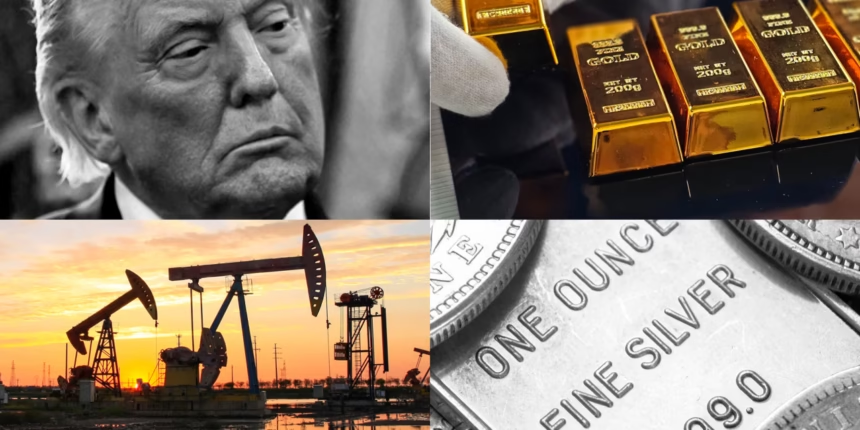
Parts of the financial market linked to hard assets and tangible items are showing signs of a potential prolonged boom, fueled by their inherent ability to retain value over time, withstand trading fluctuations, and serve as a hedge against inflation. This trend is particularly evident in commodity markets, where significant gains have been observed.
Shares of materials and energy stocks within the S&P 500 index have performed notably well since the beginning of the year, with materials stocks rising by 6.4% and energy stocks increasing by 4.3%. The momentum in these sectors underscores a broader investor confidence in physical assets amid ongoing economic uncertainties.
In addition to these sectors, precious metals have also made impressive strides in January 2026. Gold has seen an increase of approximately 3.7%, while silver has surged by around 12.4%. This follows an extraordinary performance throughout 2025, during which gold and silver experienced astonishing increases of 64% and 141%, respectively.
The shift towards hard assets can be attributed to various economic factors, including concerns about inflation and instability in traditional financial markets. As investors look for safer options to protect their wealth, demand for commodities and precious metals has surged, exemplifying the growing trend of allocating resources into more tangible investments.
Market analysts suggest that this bullish sentiment may continue as long as inflation fears persist and market volatility remains a concern. Investors are increasingly acknowledging the value of assets that can provide stability, especially in turbulent economic times. As such, both small and large investors are likely to pay closer attention to these sectors in the foreseeable future.
With the positive momentum in commodities and precious metals, many are beginning to consider the long-term implications of investing in hard assets. Whether this trend will solidify into a sustained boom remains to be seen, but current indicators point to a significant shift in investment strategies that prioritize security and value retention.