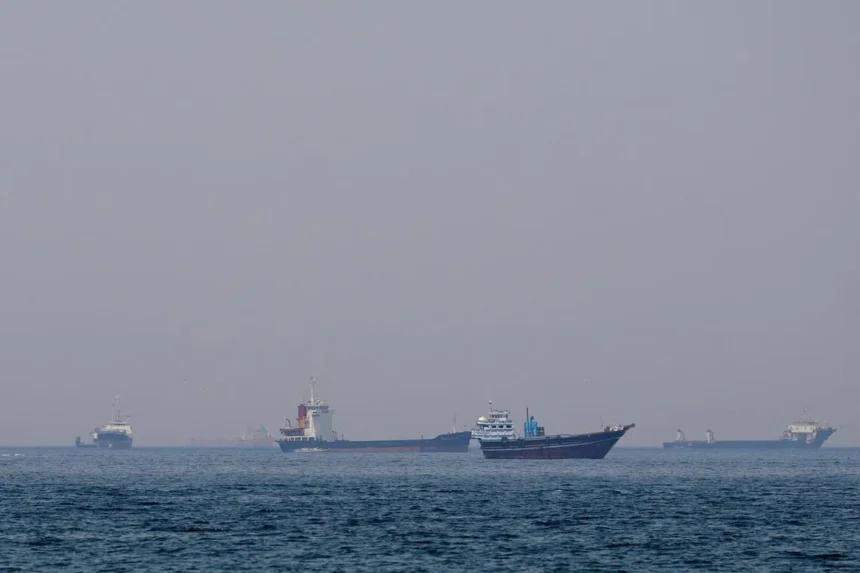
Fraudulent communications are targeting shipping firms with messages claiming to guarantee safe passage through the strategically significant Strait of Hormuz for a fee in cryptocurrency. This alarming development was highlighted by the Greek maritime risk management firm Marisks, which reported that these deceptive messages have been circulated to companies operating vessels stranded west of the waterway.
The context surrounding these scams is tense, as the U.S. has maintained its blockade of Iranian ports while Iran has alternately lifted and then reinstated its own blockade of the Strait of Hormuz. Historically, this strait has been a crucial conduit for approximately one-fifth of the world’s oil and liquefied natural gas, making it a focal point amid ongoing geopolitical conflict in the Middle East.
As diplomatic efforts for a ceasefire continue, Iran, which exerts control over this vital passage, has floated the idea of imposing tolls on vessels wishing to transit safely. On April 21, Marisks issued a warning regarding the fraudulent messages, clarifying that they originated from unknown parties pretending to be Iranian authorities. The firm stressed that these communications, which solicit payment in cryptocurrencies such as Bitcoin or Tether, are scams. There has been no immediate response from Iranian officials.
Currently, hundreds of ships and around 20,000 seafarers remain trapped in the Gulf, caught in the turmoil of conflicting maritime policies and threats. On April 18, when Iran temporarily reopened the strait under certain conditions, vessels attempted to navigate through. However, incidents occurred, including reports of Iranian boats firing on ships, prompting them to retreat. Marisks suspects that at least one of these vessels, which was threatened by gunfire during the attempts to exit the strait, may have fallen victim to the cryptocurrency scam.
The exact details of the fraudulent messages reveal a systematic approach by the scammers, stating that after verifying certain documents and assessing eligibility through the so-called Iranian Security Services, they would determine the required cryptocurrency payment, allowing for unimpeded transit at an agreed time.
Verification of the claims made in these messages remains elusive, and attempts to trace the shipping firms that received these communications have been unsuccessful. The maritime community continues to grapple with the complex, hazardous environment created by ongoing geopolitical tensions and the emergence of fraudulent operations amid these crises.