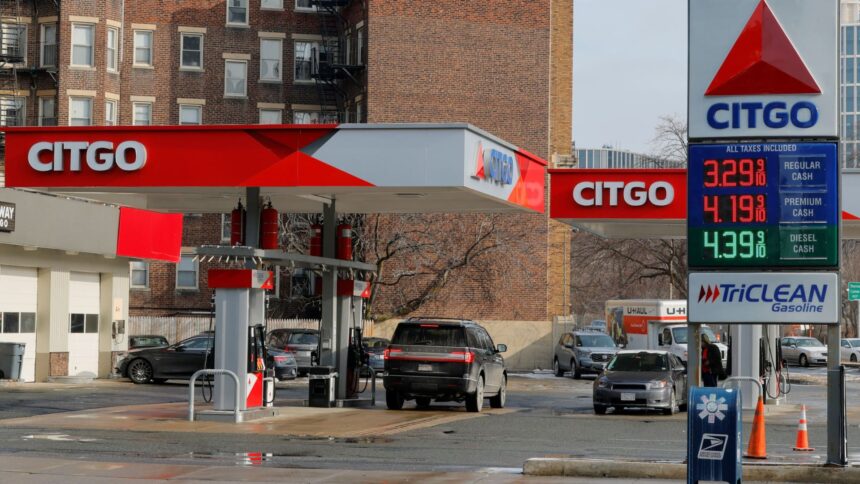
Drivers across the United States are grappling with the highest gas prices in over 18 months, a consequence of the ongoing U.S.-Iran conflict that has severely disrupted global oil supplies. As of Tuesday, the national average price for a gallon of unleaded gas reached approximately $3.54, according to the American Automobile Association (AAA). This represents a staggering 21% increase compared to just a month prior and marks the peak price since mid-2024.
The surge in gas prices was triggered last week following a U.S.-Israeli military strike on Iran, which escalated tensions and crippled the crucial Strait of Hormuz, a vital oil passageway. This incident has resulted in the largest oil supply disruption in history, with a dramatic three-day price increase that rivals the spikes seen during Hurricane Katrina in 2005, as noted by Bespoke Investment Group.
Before this month’s rise, gas prices had recently dipped to levels not seen since 2021, however, they remain below the record highs experienced in the wake of the Russian invasion of Ukraine in 2022. The crisis has drawn attention from top political figures, including President Donald Trump, who expressed optimism on Monday that the conflict would conclude “very soon.” Despite this hopeful sentiment, Defense Secretary Pete Hegseth indicated that the day would see intense military operations in Iran.
U.S. crude oil prices have fluctuated significantly, currently hovering around $84 per barrel after earlier breaching the $100 mark. Amin Nasser, CEO of Saudi Aramco, warned that the ongoing war could lead to “catastrophic consequences” for the global oil market, citing this crisis as unprecedented in scale for the region’s oil and gas industries.
The rising gas prices could jeopardize Trump’s focus on reducing living costs, a central theme of his reelection campaign. As the U.S. midterm elections approach in November, affordability remains a critical topic for voters, potentially impacting Trump’s Republican party’s control over Congress.
Earlier this year, at the World Economic Forum in Davos, Switzerland, Trump claimed the U.S. had “virtually no inflation,” pointing to decreased energy costs as evidence of economic progress. At that time, gas prices were near multi-year lows, which provided him with a platform to argue that inflation was under control.
Seasonal trends also contribute to rising gas prices, particularly as the spring break season approaches, according to AAA spokesperson Aixa Diaz. This is compounded by expectations that summer-blend gasoline, which is more expensive than the winter blend currently sold, will enter the market soon. Diaz indicated that the combination of these factors with elevated crude oil prices will likely lead to higher prices at the pump.
The future trajectory of gas prices will depend significantly on the duration of the market disruption, as noted by Raymond James analyst Bobby Griffin. If crude oil prices continue to escalate, retailers may have to increase prices to maintain profit margins. Conversely, should crude prices stabilize, there could be a temporary squeeze on oil sellers’ margins.
Even if crude oil prices eventually decline, there may not be an immediate reduction at the pumps, as retailers generally do not promptly pass down cost savings to consumers. As the situation evolves, many are left wondering just how high gas prices might climb in the coming weeks and months.