A significant anomaly in the global energy market has highlighted a sharp distinction between regions experiencing a surplus of natural gas and those grappling with acute shortages. In West Texas, a surplus has led to negative pricing at the Waha gas trading hub, while Europe and Asia face rising gas prices amid ongoing geopolitical tensions related to the U.S. conflict with Iran.
In a remarkable shift, spot prices at Waha plummeted to -$9.75 per million British thermal units last week, with traders speculating they could drop to -$10 as pipeline capacity constraints come into play during seasonal maintenance later this year. The situation arises from the dual-output nature of drilling in the Permian Basin, which produces both oil and natural gas. While a comprehensive network of pipelines facilitates the transportation of crude oil, the infrastructure for moving natural gas is comparatively limited, resulting in bottlenecks and local surpluses.
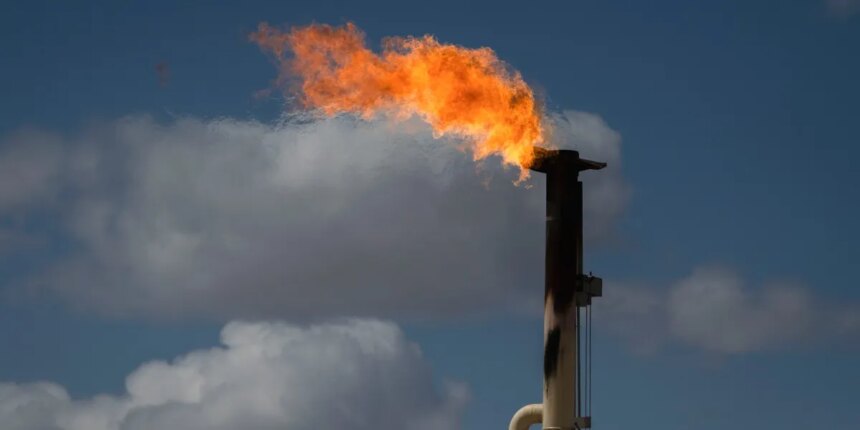
Currently, negative gas prices are not uncommon in West Texas. In fact, this year’s fluctuations have frequently dipped into negative territory, culminating in the lowest weekly average Waha spot price on record. These negative prices force producers to pay others to take excess supply off their hands, often resulting in flaring events that are now at five-year highs due to excess natural gas being burned off.
Despite the challenging pricing environment, producers in West Texas are unlikely to reduce production levels. The profitability of oil, especially following a recent surge tied to the U.S.-Israel war with Iran, has continued to offset losses from natural gas sales. Over the past three weeks, West Texas Intermediate crude prices have surged by 47%, nearing $100 a barrel.
In stark contrast, global markets have witnessed soaring natural gas prices driven by disruptions triggered by the Iran conflict. Iran’s response to U.S. actions has included closing off the strategic Strait of Hormuz, a vital route through which 20% of the world’s oil and liquefied natural gas is transported. Additionally, Iranian attacks on Qatar’s Ras Laffan Industrial City have damaged two LNG production trains, potentially affecting 17% of the country’s LNG exports, with repairs anticipated to take up to five years.
Most of the LNG that originates from the Middle East is directed to Asia, meaning that this supply shock will likely influence global markets, pushing Asia and Europe into competition for the remaining gas supplies. European benchmark gas futures surged by as much as 35% recently, reaching around 70 euros per megawatt hour, or over $20 per million BTUs—double their pre-war levels. While this price is significantly lower than the 345 euros per megawatt hour recorded in 2022 following Russia’s invasion of Ukraine, it poses a substantial challenge for European nations that need to restock gas supplies after winter heating demands depleted inventories.
The energy crisis has compelled countries in Asia to explore energy rationing, including implementing four-day workweeks and encouraging remote work practices. Analysts predict that if the closure of the Strait of Hormuz persists, LNG spot prices could climb above $30 per million BTUs this summer and potentially exceed $40 if disruptions continue for six months.
To navigate the energy crisis, several Asian countries are reverting to coal for electricity generation. The Thai government has instructed coal-fired power plants to operate at maximum capacity, and energy utilities in Bangladesh have similarly increased coal consumption. South Korea and Taiwan, both crucial players in semiconductor production, are also preparing to rely more heavily on coal in response to the unfolding energy landscape.
As dynamics shift within the global energy market, regions find themselves at opposite ends of the pricing spectrum, illustrating the stark realities faced by producers and consumers amid ongoing geopolitical tensions.