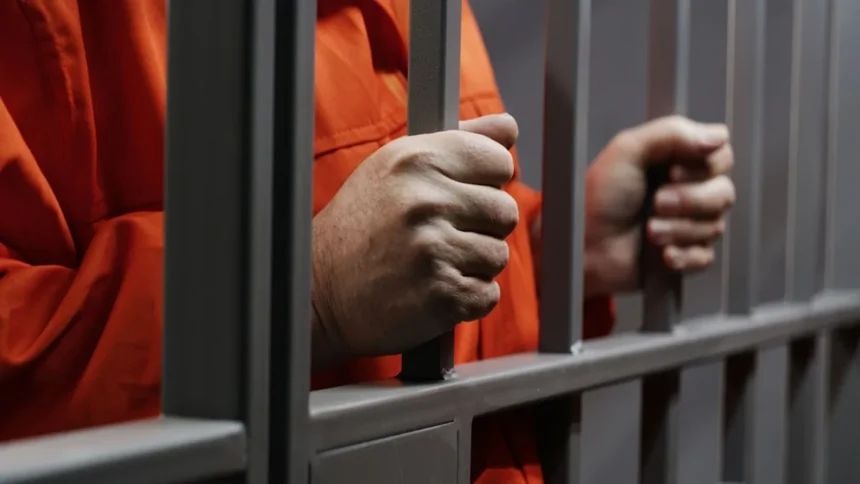
A Georgia inmate has been implicated in a crypto scheme that targeted an elderly woman in East Texas, leading to significant financial loss and sparking local law enforcement to advocate for a ban on cryptocurrency kiosks. According to the Smith County Sheriff’s Office, the incident unfolded on March 31, when the woman from Lindale fell victim to a scam involving a phone call from someone impersonating a sheriff’s office employee.
The scammer reportedly claimed that the woman had ignored a subpoena, warning her that failure to comply would lead to her arrest. This intimidation prompted her to follow the scammer’s instructions, which directed her to a Bitcoin kiosk in Tyler, where she deposited $13,000.
An investigation was launched, incorporating assistance from various agencies, including the U.S. Secret Service. Authorities soon identified the suspect as Marcus Allen Daniels, a Georgia inmate serving time for prior armed robbery convictions. During a shakedown of his cell on April 14, prison officials discovered a cellphone that contained messages linked to Bitcoin wallet numbers and payment methods.
An arrest warrant has been issued for Daniels, with a bail set at $1 million; however, he is currently serving a 20-year sentence in Georgia. As of now, the victim’s funds have not been recovered.
This incident highlights broader concerns regarding the use of crypto kiosks as tools for scams. Law enforcement agencies across the nation have consistently warned about scammers impersonating police, courts, and other officials to create a sense of urgency, pressuring victims into making immediate payments. The unique nature of cryptocurrency complicates these scams, as funds transferred are often challenging to trace or recover.
Older adults are particularly susceptible to such schemes, especially when scammers use local numbers and the names of real officials to further validate their claims. Although the case raises questions about cryptocurrency overall, it is important to note that digital currencies and blockchain technology have legitimate applications and can foster innovation in various sectors, including renewable energy.
Nevertheless, the crypto industry has attracted criticism for its association with fraud and the high energy consumption linked to mining operations. This mix of potential benefits and risks has fueled ongoing debates among lawmakers and regulators regarding oversight in the sector.
In response to the rising trend of fraud involving cryptocurrency kiosks, Smith County officials are now pushing for a local ban on these machines, citing their frequent use in scams. Efforts to regulate kiosks have emerged in other states, with places like Indiana, Minnesota, and Tennessee exploring similar actions.
To strengthen consumer protections, officials are considering clearer warning messages displayed on kiosks, stricter transaction limits, enhanced identity verification processes, and improved communication between kiosk operators and law enforcement when suspicious activities arise. For individuals, a crucial takeaway is that legitimate law enforcement will never demand payment in cryptocurrency, serving as a vital safeguard against such scams.