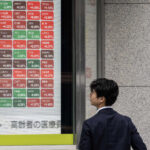
Global financial markets experienced a notable retreat as holiday-thinned trading contributed to a downturn in equities worldwide. Markets in the US, China, Hong Kong, and Taiwan were closed, leading to a broader decline in Asian shares, which fell by 0.6% following a five-day rally that had reached record highs.
In the commodities sector, Brent crude oil prices hovered around $79 per barrel, reflecting a significant drop of approximately 9% for the week. This decline can be attributed to a return to normal shipping operations through the Strait of Hormuz, following a newly signed deal between the US and Iran, which has alleviated a substantial supply shock. As focus shifts to discussions regarding Iran’s nuclear program, Vice President JD Vance indicated that a 60-day timeframe has commenced to finalize the details of the agreement.
Amid this backdrop, a pivotal question looms over the market: what direction will this cycle take, especially concerning the altcoins that typically thrive toward the end of a bull run? Michael Egorov, founder of Curve Finance, offered insights suggesting that Bitcoin’s behavior this cycle is markedly different. He noted that the recent approvals of spot Exchange-Traded Funds (ETFs) coincided with the anticipated 2024 halving event—an approximately four-year occurrence that reduces the rate of new Bitcoin issuance. This timing has attracted institutional interest that was previously absent, potentially altering established market patterns.
Egorov further highlighted a shift in speculative investment, noting that the enthusiasm that once funneled into altcoins has increasingly been diverted into “useless memecoins” following the launch of the ETFs. This change in investment dynamics underscores the evolving landscape of cryptocurrency markets as investors navigate a mixed climate of traditional assets and digital currencies.