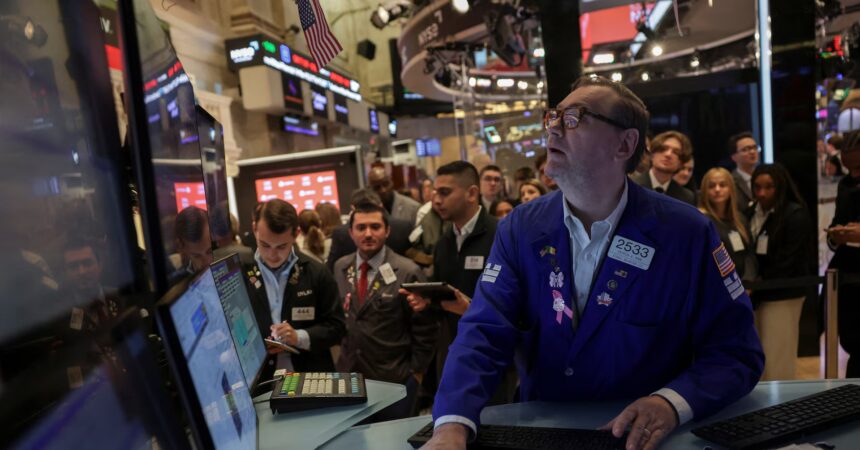
Investors faced heightened volatility in global stock markets as a tech-induced selloff spread across major indices on Tuesday. Wall Street was particularly affected by soft labor market indicators from the U.S., which compounded fiscal concerns emerging from Japan, resulting in declines across the board.
The day’s trading showed the three major U.S. indices down between 0.8% and 1.2%, while the Russell 2000 bucked the trend, rising by 0.6%. In Asia, the Nikkei 225 and South Korean indices plummeted by 3%, while Chinese stocks fell by 1%. European benchmarks were similarly weakened, declining by 1% to 2%, with the VIX index closing at its highest level since May 1.
Among individual stock performances, Home Depot experienced a sharp drop of 6%, and Amazon saw a decrease of 4%. Conversely, Warner Bros Discovery managed to gain 4%. The technology sector suffered a 1.7% decline, and consumer discretionary stocks fell by 2.5%. On the currency front, the dollar index remained flat, but the USD/JPY reached a nine-month high of 155.70, and the EUR/JPY set a record high above 180.00. In the crypto sphere, Bitcoin dipped below $90,000 but surprisingly finished the day up 1.5%.
In the bond market, U.S. Treasury yields lowered by 3 basis points, contributing to a bull steepening of the curve. Japanese yields, however, spiked dramatically with 20-year yields hitting their highest levels since 1999, at 2.775%, and 40-year yields reaching a record high of 3.66%.
Amid these fluctuations, several key concerns came to the fore. Fears surrounding the capital expenditures needed for Big Tech and the AI sector were intensified by growing liquidity and transparency issues in private credit. This confluence of factors has led to unease around leverage just as the Federal Reserve prepares to pause rate cuts. Amazon’s recent announcement of a $15 billion bond issue marked its first in three years, while major asset managers adjusted positions in response to this shifting landscape.
Technical analysis is being cited as an increasingly relevant tool for investors, with recent market moves forcing many asset classes below critical technical levels. For instance, both the Nasdaq and Russell 2000 recently closed beneath their respective moving averages for the first time in several months.
The scene was particularly bleak for Japanese markets, as the Nikkei 225 endured its largest drop since April, while the yen hit a nine-month low. The concerns around Japan’s fiscal health have driven bond and currency sell-offs that could tempt domestic, and potentially foreign, investment to re-enter the market soon.
In the U.S., however, Wall Street’s relentless optimism is facing scrutiny as analysts assess excessive valuations and risk concentration, particularly in the tech and AI sectors. Market momentum has shifted dramatically since the Fed’s recent communications indicated that further rate cuts were not guaranteed. The likelihood of a cut in December dwindled from over 90% to as low as 40% recently.
While the S&P 500 saw only a modest decline of 3% since late October, tech-specific stocks, particularly in the Philadelphia Semiconductor Index, have faced losses nearing 10%. Bitcoin mirrored this risk-off sentiment, shedding approximately 20% since late October.
Looking ahead, all eyes are on Nvidia, a company that recently became the world’s first $5 trillion company but has seen a 10% drop in stock price since reaching that milestone. As Nvidia prepares to release its quarterly earnings, Wall Street expects that the bar for a market recovery led by the tech sector is set high, with many funds—including SoftBank and Peter Thiel’s hedge fund—having reduced their exposure to Nvidia.
Investors find themselves anticipating more market movements from upcoming economic indicators, including machinery orders from Japan, interest rate decisions from Indonesia, and inflation reports from the UK and Eurozone, alongside U.S. trade metrics and Treasury auctions. With crucial earnings reports and Fed officials scheduled to speak, the financial landscape appears poised for further fluctuations as the year closes.