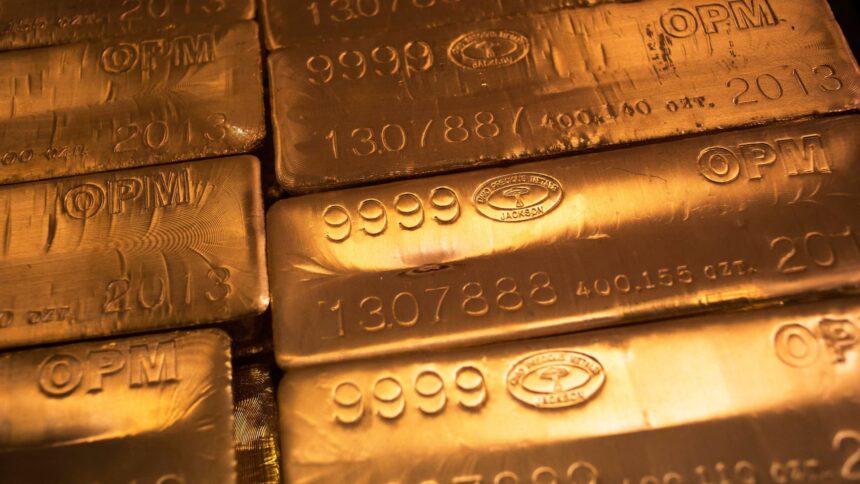
Gold has entered a correction phase as investor concerns surrounding tensions with China, the independence of the Federal Reserve, and an artificial intelligence bubble have eased. Following a brief surge that pushed gold prices above $4,300 last week, both spot gold and gold futures have swiftly dipped below the $4,000 mark. Despite this decline, the yellow metal has still surged over 40% in 2025.
Maximilian Layton, the global head of commodities research at Citi, predicts that the pullback may extend in the near term. With gold now trading below $4,000, he anticipates that $3,800 will be the next level to watch, indicating a potential decline of more than 4% from current prices. According to Layton, critical support can be found around the $3,600 level, which would represent a 9% drop.
Layton attributes these shifts to several factors, including a new approach by President Trump towards negotiations not only with China but also with countries like Malaysia, Thailand, Vietnam, Cambodia, and potentially Brazil, India, and Taiwan. With President Xi’s willingness to collaborate amidst changing dynamics in the gold market and the possibility of an end to the U.S. shutdown, Layton suggests that gold prices are set to continue their downtrend in the short term.
Investor sentiment has improved on various fronts, mitigating the pressures that had previously driven demand for gold. Easing U.S.-China tensions and greater confidence in Federal Reserve independence, notably following the Supreme Court’s decision to allow Fed Governor Lisa Cook to retain her position, have contributed to this optimistic outlook. Additionally, apprehensions regarding an AI bubble seem to have lessened as investors become more accepting of elevated tech valuations.
As of Tuesday, the stock market showed gains ahead of key earnings reports from some of the nation’s largest companies. However, Wall Street remains wary about the underlying concerns that prompted many to seek the safety of gold, suggesting that although a correction may be occurring, the catalyst for such a shift still looms large.
Deutsche Bank’s Michael Hsueh predicts that the gold correction could bottom out between $3,700 and $3,800, which would indicate that the current decline is “closer to its end than the beginning.” He expressed continued confidence in gold’s medium-term potential. Additionally, Michael Widmer, a commodity strategist at Bank of America, has forecast that gold could soar to $5,000 per ounce by 2026, a level exceeding current prices by more than 25%. Dan Watrobski of Janney Montgomery Scott also suggests that a longer-term target for gold could be in the $4,500 to $5,000 range.
Citi’s Layton concluded that the rationale for investing in gold as a hedge against potential geopolitical tensions—whether involving the U.S. and China, Russia and Ukraine, or Taiwan—remains compelling. He emphasized the importance of understanding at what price investors will feel inclined to enter the market, suggesting that a price of $4,000 per ounce may not attract significant buying on the way down.