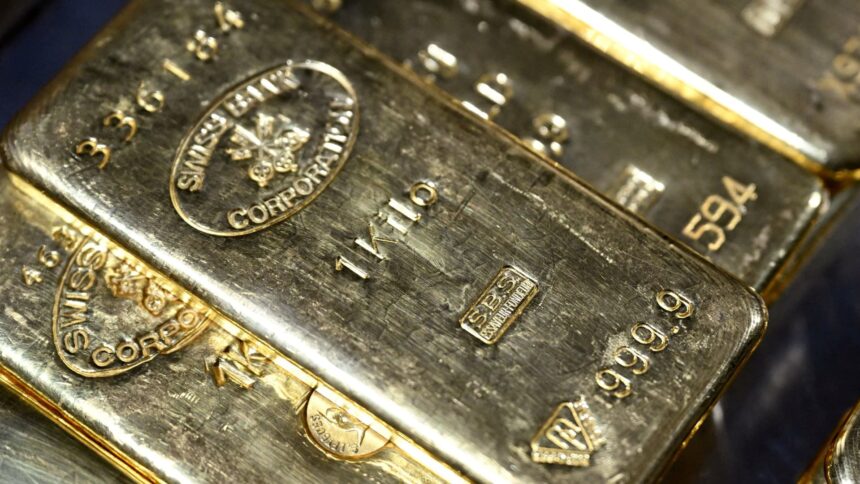
Spot gold prices experienced a notable rise of 1.4% early Friday morning, indicating a potential turnaround as it aims for its first weekly gain in five weeks. By 4:30 a.m. ET, spot gold was trading around $4,182.28 per ounce, marking an anticipated 2.3% increase for the week—its first rise since late May. This uptick reflects a broader trend where front-month U.S. gold futures saw an increase of 1.5% during intraday trading.
The gold market has faced significant challenges this year, primarily driven by concerns surrounding rising inflation, a strengthening dollar, and a shift toward hawkish monetary policies among central banks influenced by the ongoing U.S.-Iran conflict. This year, gold suffered its worst quarter in 13 years, with prices remaining approximately 22% below an all-time high of over $5,300 achieved in January.
The recent rebound in gold prices follows the release of U.S. nonfarm payroll data, which showed the American economy adding 57,000 jobs in June. This figure fell short of the downwardly revised 129,000 jobs added in May and was below the Dow Jones consensus forecast of 115,000 jobs. Following this report, market participants have begun reassessing expectations for interest rate hikes, reducing the probability of the Federal Reserve raising rates by a quarter-point in September to 53.5%, compared to earlier estimates of around 65%.
In addition to gold, other precious metals also saw gains on Friday morning. Spot silver prices surged by 2.9%, reaching $62.77 per ounce and aiming for a weekly increase of 6.7%. Silver futures for August delivery rose 3.5%. Platinum was trading up 2.8% at $1,660.10, while palladium increased approximately 1% to $1,280.09.
Analysts from OCBC issued a note expressing a “cautiously constructive” outlook on gold, attributing the uptick in prices to the softer-than-expected payroll data which diminishes the likelihood of aggressive Fed policy moves. They suggested that gold’s recovery could continue if upcoming U.S. data helps maintain lower real yields and dampens the dollar’s strength. However, they cautioned that with stable unemployment rates, persistent hawkish rhetoric from the Fed, and ongoing inflation risks, a degree of caution is still warranted. They emphasized that a sustainable recovery in gold prices would require a more decisive easing of real yields, stabilization of ETF and investor demand, and a shift in the Fed’s hawkish stance.
Despite the major rallies both gold and silver experienced in 2025—surging 66% and 135%, respectively—the two metals have encountered declines of 3% and 12% so far this year. While the positive momentum extended into early 2026, volatility returned, with silver futures facing their most significant one-day drop since the 1980s at the end of January. Additionally, gold’s status as a safe haven has been questioned following the escalation of the U.S.-Iran war earlier in the year.