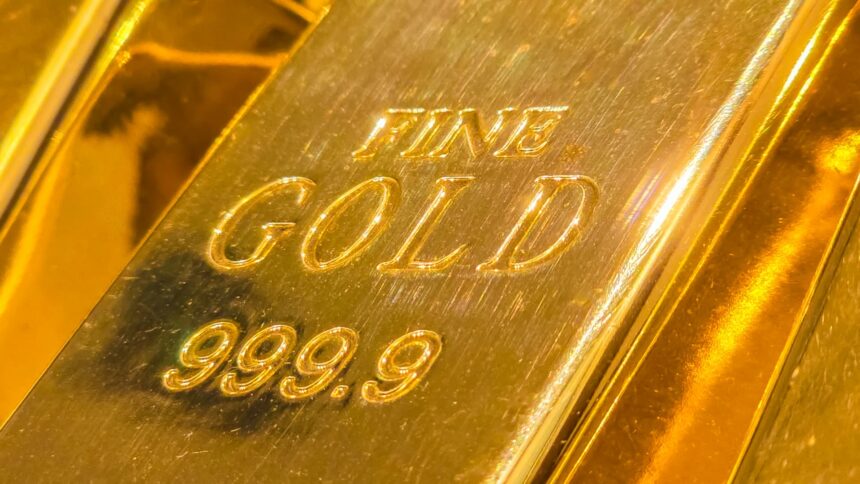
Gold prices remained stable on Friday after reaching a historic peak just shy of $5,000 an ounce earlier in the day. Spot gold was reported at $4,931.28 an ounce at 1332 GMT, following a record high of $4,967.03. In parallel, U.S. gold futures for February delivery saw a slight increase of 0.4%, settling at $4,934.20.
Market analysts attribute this surge to gold’s increasingly pivotal role as a safe haven asset amid heightened economic and political uncertainties. Tai Wong, an independent metals trader, highlighted the necessity of gold in strategic portfolios during these transformative times, stating, “Gold’s role as a haven and a diversifier in highly uncertain economic and political times is making it a necessity for strategic portfolios.”
The rise in gold prices has been driven by several factors, including escalating tensions between the U.S. and NATO regarding Greenland, concerns surrounding the Federal Reserve’s independence, and ongoing uncertainties related to tariffs. These elements have propelled heightened demand for safe-haven assets.
Additionally, increased central bank purchases and a noticeable shift away from the dollar have further supported gold’s ascent. Analysts at SP Angel pointed out that growing frustrations within the White House regarding Fed policy, alongside calls for lower interest rates, may be undermining confidence in U.S. government debt.
As markets anticipate that the Federal Reserve will maintain steady interest rates in its upcoming meeting at the end of January, projections suggest additional cuts may occur in the latter half of 2026. Gold, being a non-yielding asset, tends to perform well in environments of low interest rates.
In the realm of precious metals, silver also experienced significant gains, climbing 3.1% to reach $99.19 an ounce, just off its record high of $99.65. The metal’s value has surged by approximately 147% over the previous year, driven by a combination of solid demand, complications in refining, and persistent supply shortages. Wong pointed to anecdotal evidence of increased retail demand in various markets, notably lines forming in Shenzhen and high purchases in Turkey and Dubai.
Platinum prices also rose, increasing by 2.6% to $2,696.57 an ounce, after achieving a record $2,718.40. This metal has seen a 31% increase since the beginning of the year, with HSBC noting a growing investor interest as platinum is seen as a more affordable alternative to gold. The bank projected that the production and consumption deficit for platinum could widen to over 1.2 million ounces by 2026.
Meanwhile, palladium recorded a gain of 2.3%, reaching $1,963.18, adding to the robust performance of the precious metals market amid these dynamic economic conditions.