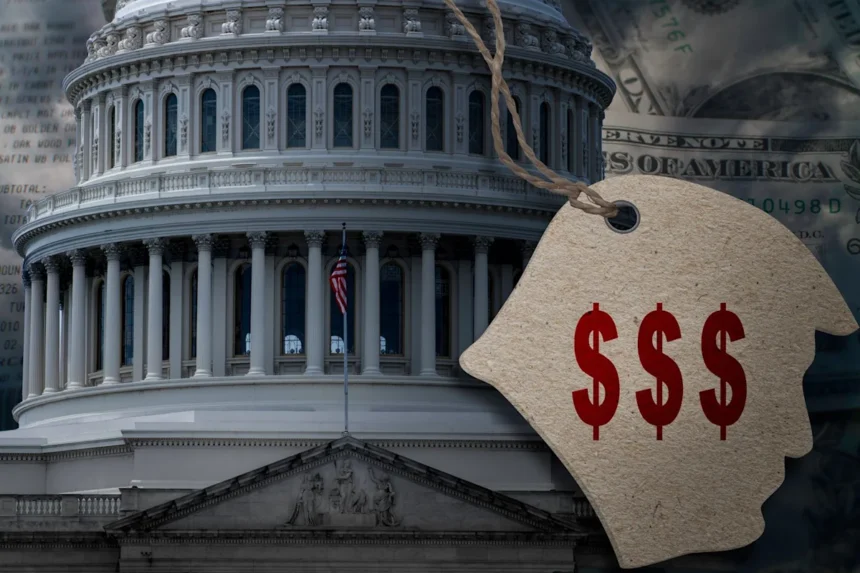
As of Tuesday morning, the S&P 500 has experienced a robust year-to-date increase of approximately 8%, positioning President Donald Trump’s second year in office positively for stock markets. This growth occurs even amidst considerable uncertainty surrounding his unpredictable trade policies, military engagements, and efforts to influence the Federal Reserve’s independence.
A significant factor contributing to this market resilience is the surge in generative artificial intelligence (AI). Major corporations across the United States are investing hundreds of billions into constructing data centers, propelling stock prices for chip and memory manufacturers. However, this upward trajectory might not be sustainable in the long term, leading analysts to speculate on potential pitfalls for the current market rally.
One major concern is the current stock valuations, which are reaching historic highs. The cyclically adjusted price-to-earnings (CAPE) ratio, a key measure of stock assessments over a decade, currently stands at an alarming 41. This number exceeds the peak ratio of 32.6 experienced during the Great Depression and is just shy of the all-time high of 44 recorded during the dot-com bubble. The parallels with previous market euphoria are striking; during the internet boom of the late 1990s, numerous speculative companies entered the market at excessive valuations without demonstrating sustained revenue or profit growth—ultimately leading to a significant market correction.
Another issue is the apparent unsustainability of current data center investments. Wall Street anticipates that major hyperscalers will invest an astonishing $700 billion in AI-related capital expenditures this year, with expectations for further increases. However, this spending is starting to outpace operational cash flow, compelling companies to seek additional financing through debt markets, thereby increasing their risk. The resulting financial pressure may weaken profit margins due to rising interest expenses and depreciation costs associated with aging technology.
Inflation and rising interest rates also pose major threats to the equity markets. Typically, when inflation increases, the Federal Reserve responds by elevating its benchmark interest rate, which can deter investment in equities compared to risk-free assets, like Treasury bonds. Recently released data indicates an annual inflation rate of 4.2%, significantly above the Fed’s target of 2%. Although a potential resolution to ongoing conflicts, such as the one in Iran, may eventually stabilize energy costs, experts warn that it could take years to rehabilitate the region’s infrastructure, leading to persistent structural inflation.
While the Federal Reserve has opted to maintain current interest rates for the time being, economic pressures could necessitate increases as soon as later this year or as far off as 2027. Observers caution investors that timing the market is often unreliable, but the convergence of adverse macroeconomic indicators may precipitate a market downturn—a decline of 10% to 20% could occur within the next few years, potentially spurred by a deceleration in AI-related investments.
Despite the potential for market drawdowns, historical trends show that U.S. equities typically rebound stronger over time. Investors looking to navigate potential future crashes are advised to steer clear of speculative tech stocks and focus on stable, resilient companies that can thrive regardless of economic fluctuations. Maintaining liquidity can also position investors favorably for when a recovery occurs.
For those considering investments in the S&P 500 Index, it may be worth exploring alternatives. An analyst team from a prominent investment advisory service has identified ten compelling stocks that they believe will outperform the market, suggesting that the S&P 500 Index may not be the best immediate investment choice.
In summary, while the current stock market rally under Trump appears robust, underlying economic indicators and valuation concerns have left analysts cautiously optimistic, indicating that investors should proceed with careful consideration and strategic planning.