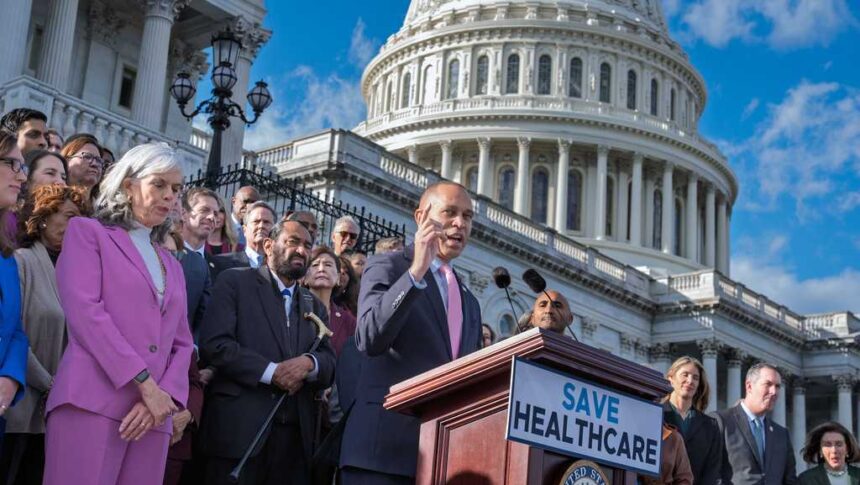
The House has approved a bill aimed at concluding the nation’s longest government shutdown, a move that sends the measure to President Donald Trump for his signature. This pivotal vote comes after an unprecedented 43-day funding lapse, which left federal workers without paychecks, stranded travelers at airports, and prompted many to seek assistance from food banks to feed their families.
With the passage of this bill, Democrats will see their efforts to extend crucial health care subsidies come to an end. This is particularly concerning for residents in Massachusetts, where about 400,000 individuals rely on the state health connector. Of these, approximately 340,000 will face a loss of some or all financial assistance previously available to help make their health insurance more affordable.
Governor Maura Healey highlighted the real-world impacts of this change, citing a specific case involving a 62-year-old couple in Peabody. Currently earning $85,000 per year, the couple pays $900 per month in healthcare premiums. Following the subsidy cuts, their monthly payments will skyrocket to nearly $2,100.
Republican senators have argued that the country cannot sustain these subsidies, contending that they are merely masking the issues stemming from the Affordable Care Act. Wisconsin Senator Ron Johnson voiced his concerns, stating, “They’ve just been papering over the failure of Obamacare, papering over the massive increase in subsidies in premiums by throwing subsidy dollars at it.” While Senate Republicans plan to hold a vote next month on extending these tax credits, the outcome remains uncertain.
Open Enrollment is currently available on the Massachusetts Health Connector website and will continue until January 23. For those looking to start coverage by January 1, it is essential to enroll, choose a plan, and make the first payment by December 23.
Audrey Gasteier, Executive Director of the Health Connector, acknowledged the anxiety surrounding rising costs, including those associated with insurance. She encouraged residents to begin the enrollment process, emphasizing that it’s a time when many have questions and need assistance. The Health Connector provides a help line for those who prefer to seek guidance over the phone, and in-person support is also available for individuals who wish to meet face-to-face.
Gasteier stressed the importance of updating account information for those currently covered through the health connector. Changes such as income fluctuations, marriage, or the birth of a child could substantially affect eligibility for greater subsidies or other types of assistance.