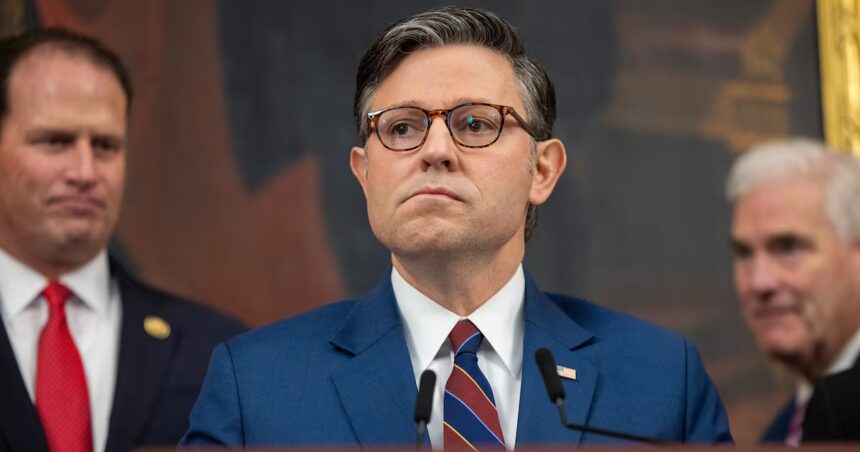
House Speaker Mike Johnson faced intense scrutiny following President Donald Trump’s recent comments regarding a controversial pardon he granted to a cryptocurrency executive. The tension escalated during a press interaction with CNN reporter Manu Raju on Capitol Hill, where Raju highlighted the contradiction between Johnson’s previous criticism of President Joe Biden’s clemency actions and Trump’s admission during a Sunday interview on “60 Minutes.”
Raju pointed out that just a week ago, Johnson had lambasted Biden for his purported lack of familiarity with the individuals being pardoned, stating that it undermined the integrity of the process. “You said he didn’t even know who he was pardoning, but last night on 60 Minutes, President Trump admitted not knowing he pardoned a crypto billionaire who pleaded guilty to money laundering. Does that also concern you?” Raju pressed Johnson for clarity.
In response, Johnson appeared caught off guard, stating, “I don’t know anything about that. I didn’t see the interview. You have to ask the president about that. I’m not sure.” His remarks seemed to deflect accountability, particularly given that just a few days earlier, Johnson had expressed serious concerns about Biden’s decision-making capabilities, characterizing the pardons as “invalid on their face.” This comment followed a report from the Republican-led House Oversight Committee that suggested Biden’s aides were obscuring signs of “mental decline,” alleging that the president may have issued pardons without full cognizance of their implications.
Johnson emphatically stated at the time, “It sounds like a terrible novel or something, but this is reality. The pardons, for example—he pardoned categories of violent criminals and turned them loose on the streets, and he didn’t even know who. He didn’t even know what the categories were, apparently, much less the individual people, that he pardoned.”
However, Trump’s admission during the “60 Minutes” segment starkly highlighted the inconsistencies in Johnson’s stance. When questioned about the pardon of Binance founder Changpeng “CZ” Zhao, who had pleaded guilty to federal money laundering charges linked to facilitating criminal activities, Trump stated, “I don’t know who he is.” Zhao’s actions had significant ramifications, as they allowed billions of dollars in illicit transactions to circulate through his cryptocurrency exchange, leading to one of the largest corporate penalties in U.S. history.
Moreover, Johnson’s reluctance to confront Trump’s remarks was particularly striking considering his past declarations about the importance of a president’s intimate knowledge of their pardons. This was further compounded by Johnson’s earlier claims regarding having not seen a recent speech from Trump to military leaders, where he again employed the same excuse in a confrontation with Democratic Representative Madeleine Dean. Despite his deflections, Dean emphasized the dangers presented by Trump’s behavior, stressing the compounded risks to national and international stability, particularly as allies reassess their perspectives and adversaries mock the situation.
As Johnson navigates the fallout from this incident, the implications for his leadership and the broader Republican narrative surrounding presidential pardons remain to be seen, especially in light of Trump’s controversial admissions and their potential effects on public perception.