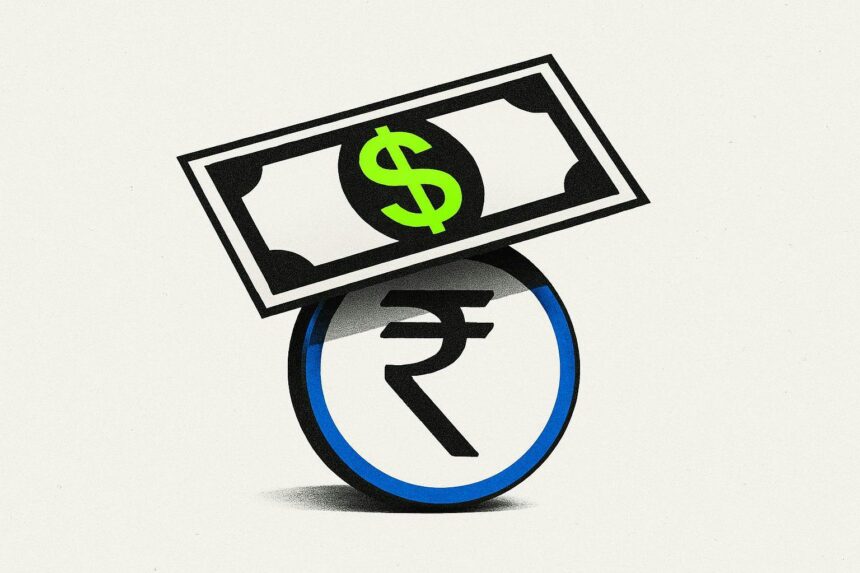
The Indian rupee is currently facing significant pressure, hovering just above its historic lows this week. A strong demand for dollars combined with consistent foreign outflows has prompted intervention from the Reserve Bank of India (RBI). Importers in India are rapidly acquiring dollars, exacerbating the rupee’s decline, as trade tensions with the United States rise and capital continues to exit the Indian market.
Traders are particularly focused on the critical threshold of 88.80 per dollar, which marks the rupee’s all-time low. There is a prevailing expectation that the RBI may increase its interventions to prevent the currency from breaching this level, although the central bank is not attempting to establish a fixed rate. Instead, the RBI’s role has been to smooth out fluctuations in the currency’s value and mitigate volatility.
The current economic landscape is exacerbating these challenges. Foreign investors recently withdrew substantial sums from Indian stocks and bonds, reflecting growing concerns about the country’s economic prospects. This outflow not only puts additional stress on the rupee but also negatively impacts local equities. The reinforced dollar and inconsistent signals from Asian markets are further complicating the situation, making it more difficult for a recovery.
Moreover, the broader economic backdrop is characterized by uncertainty. A government shutdown in the United States has resulted in a halt in the release of official data, leaving markets dependent on less reliable private figures for insights into economic performance. This situation has led to increased speculation regarding potential interest rate cuts by the Federal Reserve, with warnings from analysts highlighting that the data blackout could have prolonged implications. Rising energy prices and mixed messages from major central banks suggest that emerging market currencies like the rupee could continue to face challenges in the near future.