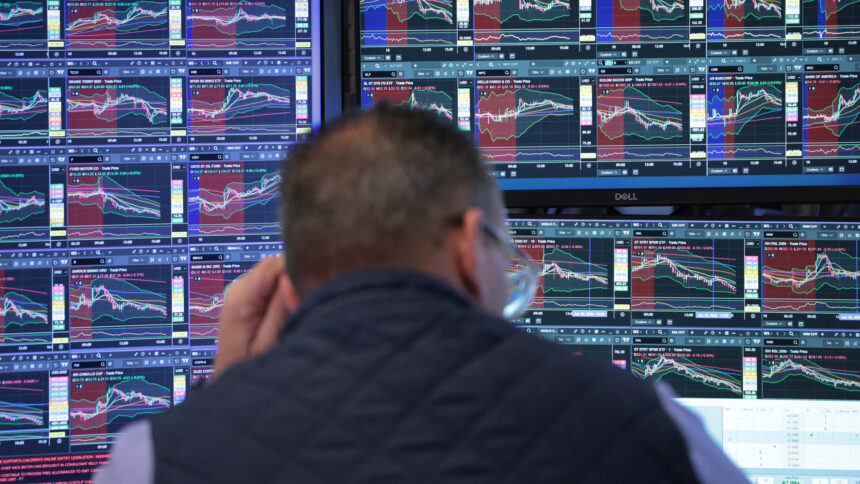
Traders on the floor of the New York Stock Exchange were deep in discussion on June 10, 2026, as they navigated the increasingly volatile landscape of global markets influenced by a resurgence of conflict in the Middle East. The situation escalated dramatically following U.S. Central Command’s airstrikes on Iranian military installations, provoking a retaliatory wave of attacks from Tehran that swept across Gulf nations.
While U.S. futures displayed a modest uptick, Asian markets faced widespread declines, reflecting the nervous sentiment coursing through the global economy. Crude oil prices climbed approximately 2% on Thursday, though they remained under the $100-per-barrel threshold. Traders appeared to be weighing the potential for a significant supply disruption against a backdrop of ample market buffers. Key factors mitigating the risk included alternative shipping routes, increased energy exports from the U.S., and releases from the Strategic Petroleum Reserve, all of which have helped to stabilize prices despite ongoing tensions in the Strait of Hormuz.
The broader concern for investors revolves around a scenario in which energy costs and borrowing rates remain high for an extended period. The conflict involving Iran—a crisis the U.S. has dubbed not an “endless” war—now seems poised to stretch indefinitely, with analysts expressing fears that it may devolve into a “forever war.” Billy Leung, investment strategist at Global X ETFs, emphasized that the term “forever war” might misplace the focus, pointing out that while wars don’t last indefinitely, the associated risk premiums can linger in financial markets.
Amid resumed hostilities and failed diplomatic attempts, market sentiment has shifted from anticipating a ceasefire to bracing for a more drawn-out conflict. Leung indicated that this prolonged uncertainty could provoke a higher demand for risk premiums in a world grappling with rising geopolitical tensions, even as the immediate headlines fade.
Investors are shifting their perspectives, no longer viewing the conflict as a transitory inflationary event, but rather as a catalyst for repricing the cost of capital amid rampant geopolitical volatility. “A prolonged war ends the era of buying everything and being rewarded,” Leung noted. The implications for corporate earnings are significant, as rising energy costs and elevated capital expenses could necessitate higher performance benchmarks across various sectors.
Benjamin Jones, global head of research at Invesco, provided a more tempered outlook, characterizing the firm’s base case as a “status quo” scenario rife with intermittent military engagements rather than an all-out war. He highlighted patterns in equity markets traditionally responding to geopolitical crises—initial sell-offs followed by recoveries. Referencing historical trends, Jones stressed the importance of maintaining investments during periods of market turbulence, advocating that staying the course often proves to be the most beneficial strategy.
Compounding these concerns, Fitch Ratings recently downgraded its outlook on the global sovereign sector from “neutral” to “deteriorating” in light of the ongoing U.S.-Iran conflict. The ratings agency warned of potential repercussions that could stifle global economic growth, heighten inflation rates, and push bond yields higher, alongside increased geopolitical uncertainty.
“The stalemate is likely to persist for a considerable time, regardless of the frequency of aerial assaults by the U.S. on Iran,” stated Andy Lipow, president of Lipow Oil Associates, underscoring the entrenched positions both Tehran and Washington hold, each believing time favors their respective strategies.
As global investors assess the unfolding situation, they are confronted not only with immediate market reactions but also with the broader implications for international economic stability, urging vigilance and strategic recalibration in a period marked by unpredictability and heightened geopolitical risk.