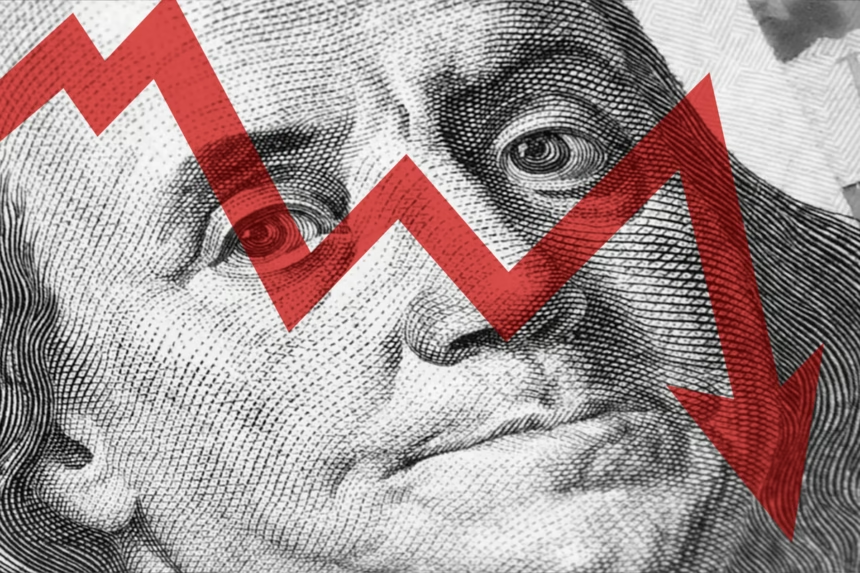
In a significant turn of events, tensions in the Middle East have escalated following airstrikes by the U.S. and Israel targeting Iranian military and leadership positions in February. This military action prompted Iran to respond with missile and drone attacks, disrupting crucial oil shipments through the Strait of Hormuz. This narrow waterway is vital for global energy transit, accounting for 20% of the world’s oil and liquefied natural gas exports.
As a result, the Strait of Hormuz has effectively been closed for over a month, leading to a dramatic reduction in maritime traffic. The number of vessels traversing this key route has plummeted to single digits daily, a steep decline from more than 100 ships before the outbreak of hostilities. This disruption has significantly impacted oil prices, pushing Brent crude oil to over $127 per barrel by early April, a peak not seen since the summer of 2022.
Initially, the conflict caused the S&P 500 to fall by 9% from its recent highs. However, the U.S. stock index has managed to recover those losses, fueled by mounting investor optimism regarding a potential resolution. Despite this, concerns linger over the sustainability of this recovery. Hedge fund manager Ken Griffin has warned that a prolonged closure of the Strait of Hormuz, lasting six to twelve months, could trigger a global recession. Such an outcome could inevitably lead to substantial declines in the stock market.
Investor awareness of historical trends during economic downturns is critical. According to historical data, the S&P 500 experiences significant losses during recessions, with an average decline of 32%. This decline has been documented during previous recessions, with the most severe downturns witnessing the index dropping as much as 57%.
Economists, including Moody’s chief economist Mark Zandi, have expressed concerns that sustained high oil prices could make recession inevitable. If oil prices remain elevated for an extended period, consumer spending— a primary driver of economic growth—may slow down, exacerbating potential economic troubles. This situation is particularly relevant given that the current S&P 500 trading multiple is above historical averages.
Despite these challenges, Wall Street analysts remain relatively upbeat. Research indicates that S&P 500 companies are expected to see earnings growth in the coming periods, although any signs of weakness in consumer spending could lead to downgrades in expectations that might, in turn, negatively influence stock market performance.
Currently, analysts at various investment firms forecast an average year-end target of 7,459 for the S&P 500, suggesting a potential 7% increase from its current standing of 6,967. Ultimately, regardless of immediate market fluctuations, investors are advised to concentrate on long-term wealth-building strategies rather than get caught up in the uncertainty of short-term volatility.