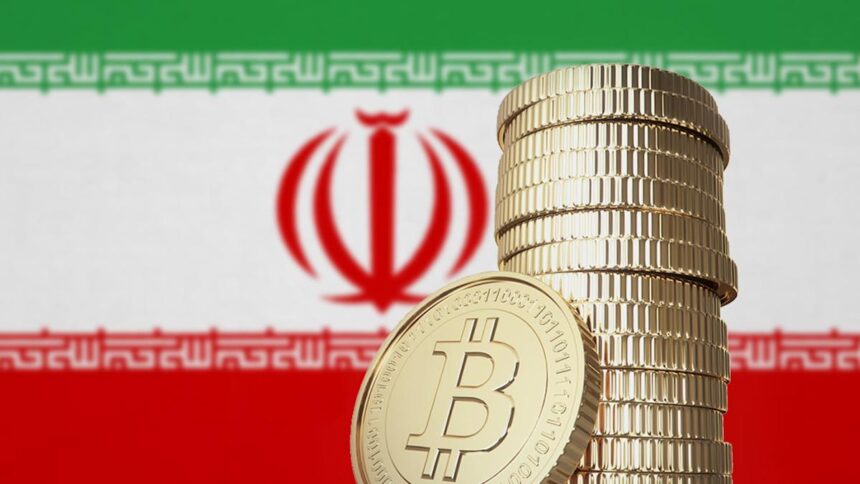
A significant development in the intersection of government policy and cryptocurrency has emerged from Iran, signaling a notable shift in how nations may leverage Bitcoin in maritime trade. Iran is reportedly exploring the creation of a system known as Hormuz Safe, which aims to utilize Bitcoin for settling maritime insurance in a bid to operate outside the traditional banking norms and sanctions imposed by Western nations.
Iran’s approach involves cargo owners purchasing cryptographically verified insurance certificates—not tolls, as explicitly banned—to facilitate passage through the crucial Straits of Hormuz. This unconventional system raises questions about the legitimacy of the insurance, akin to a coercive protection racket, where failure to pay may lead to dire consequences, such as the risk of military action.
The structure of this maritime insurance suggests that for a cargo valued at $100 million, the owner would be required to pay around $1 million in insurance fees. This arrangement raises skepticism regarding whether Iran would genuinely compensate for losses, particularly if a ship were damaged by U.S. military actions.
This initiative could reportedly generate significant revenue—estimates suggest it could yield up to $10 billion monthly. However, doubts remain about the feasibility of these projections given the ongoing U.S. blockade and sanctions against Iran.
Historically, Iran’s relationship with cryptocurrency dates back to 2018 when former President Donald Trump withdrew the U.S. from the Joint Comprehensive Plan of Action (JCPOA), cutting Iran off from international financial systems. In response, Iranian lawmakers legalized industrial Bitcoin mining in 2019. At one point, Iran boasted 427,000 mining devices, accounting for 4.2% of the global Bitcoin hash rate, benefiting from government-subsidized electricity.
Despite the Iranian rial plummeting by 96% against the U.S. dollar, the on-chain economy in Iran was projected to be valued at $7.78 billion by 2025. Power outages in the country have been linked to the operations of Bitcoin miners, showcasing the extent to which the nation has relied on cryptocurrency as a method for sanction evasion.
As Bitcoin’s censorship-resistant nature has been touted by advocates as a solution for sovereign nations, the scenario unfolding in Iran raises pressing ethical questions. Countries like North Korea have previously engaged in extensive crypto hacks, and Iran’s plea for Bitcoin under the guise of maritime insurance might galvanize criticism against cryptocurrency.
Iran’s announcement marks a pivotal moment where a government publicly acknowledges using Bitcoin as a means to bypass sanctions and collect payments, spotlighting the dual-edged nature of the technology. Critics, including those opposed to cryptocurrency, are likely to leverage this development to argue against its use, emphasizing the technology’s potential for facilitation of illicit activities. However, proponents assert that Bitcoin remains agnostic, capable of being harnessed for both constructive and contentious purposes.
The evolution of Iran’s role in the cryptocurrency space will certainly be closely monitored, as it represents a defining chapter in how state actors engage with decentralized financial systems amidst global sanctions and economic restrictions.