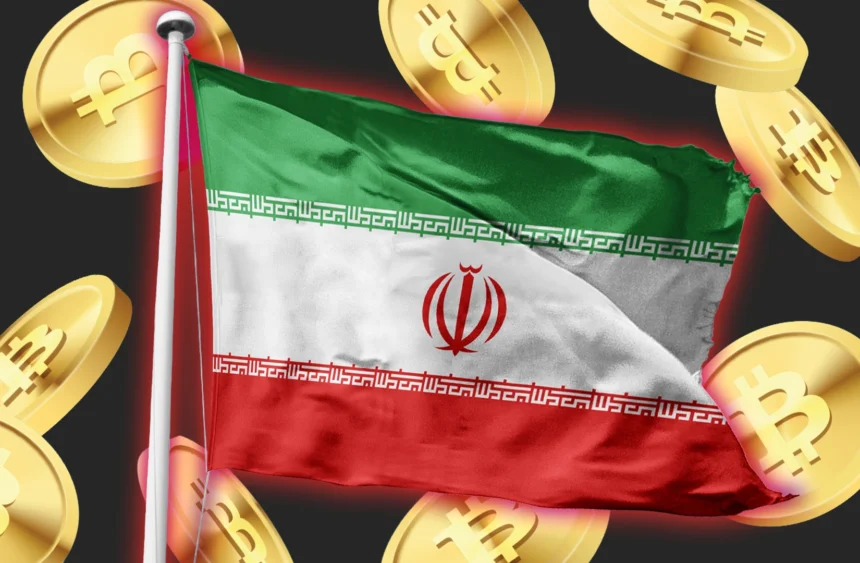
In a remarkable development amidst ongoing tensions involving Israel, Iran, and the United States, the Iranian government has announced plans to accept Bitcoin as payment for navigation fees associated with the strategically vital Strait of Hormuz. This announcement, while significant, raises critical questions about the practicality of utilizing Bitcoin for such transactions.
The Strait of Hormuz is the conduit for approximately 21 million barrels of oil daily, making it a crucial artery for the global oil supply. Analysts assert that the Bitcoin network is currently unable to support the magnitude of transactions necessary for the toll system announced by Iran’s parliament. Sam Lyman from the Bitcoin Policy Institute highlighted that Bitcoin transactions, notorious for being publicly accessible, slow, and occasionally costly, limit their viability for real-time, high-volume payments. As a result, many users turn to second-layer solutions, but these too face obstacles, particularly regarding liquidity.
Recent reports confirmed Iran’s intentions to begin accepting Bitcoin as part of its broader strategy for adopting “censorship-resistant financial rails.” Over the past few years, Iran has emerged as a notable player in the cryptocurrency sphere, particularly after legalizing Bitcoin mining in 2019. This move enabled miners in the country to significantly contribute to the global Bitcoin hashrate, totaling over 4%. However, financial transactions linked to Iran predominantly involve stablecoins such as Tether (USDT), particularly those transacted on the Tron network.
Despite the potential for quicker transactions, stablecoins present their own set of challenges for Iran. Tether, for example, possesses the authority to freeze accounts associated with Iranian entities, a tactic previously employed that led to the freezing of wallets connected to the Iranian central bank. This inherent vulnerability makes Iran cautious about relying solely on stablecoins, which are still tethered to centralized issuers that can capitulate to external pressures.
The toll system approved by Iran’s parliament stipulates fees for oil tankers passing through the Strait of Hormuz, which could generate approximately $2 million from a single supertanker at the current rate of around $1 per barrel. Bitcoin, while a decentralized currency, is currently unsuited for the volume and speed of payments needed for such significant transactions. Lyman pointed out that Bitcoin’s structure—where transactions can take up to ten minutes to confirm—hinders its functionality for timely payments.
The Lightning Network, which seeks to address these scalability issues, has its own limitations, especially in terms of liquidity. The largest transaction recorded on the Lightning Network stood at $1 million, which pales in comparison to the amounts required for a single tanker toll.
In summary, while the Iranian government’s move to accept Bitcoin may symbolize a step toward a more autonomous financial strategy, substantial technological hurdles remain. Without enhancements to Bitcoin’s transaction speeds and capacity, the goal of utilizing it for critical oil shipping operations could remain out of reach for the foreseeable future.