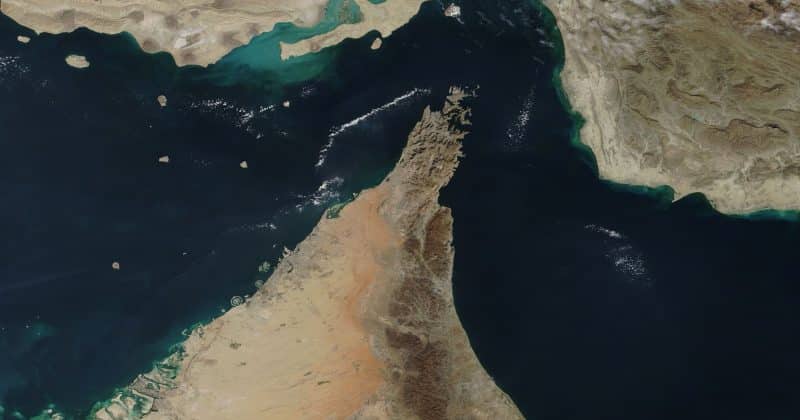
Iran has announced its intention to exclusively manage and reopen maritime traffic through the Strait of Hormuz, rejecting any shared responsibility with other nations. This declaration underscores Tehran’s goal of transforming the critical oil chokepoint into a profitable venture increasingly reliant on Bitcoin transactions.
The Strait of Hormuz, situated between Iran and Oman, has historically been a pivotal conduit for approximately 20-25% of the world’s oil and liquefied natural gas (LNG) shipments. Recently, Iran’s decision to close the strait from March 2-4, 2026, triggered significant upheaval in global energy markets. While partial re-openings occurred in April, with Iranian officials declaring the route “completely open” for commercial traffic, optimism was short-lived as US blockades and ongoing military actions continued to hinder shipping operations. By mid-June 2026, however, shipping traffic was reported at its highest levels since the onset of conflicts in the region.
In a bid to formalize its control over maritime navigation, Iran has proposed establishing the Persian Gulf Strait Authority. This body would manage all transit through the strait and levy transit fees, potentially generating annual revenues of up to $40 billion. The US, in turn, has consistently advocated for toll-free navigation in accordance with international maritime law.
Negotiations have included discussions regarding a 30-day timeline for a full reopening contingent upon a broader deal between the US and Iran. As part of this effort, Iran has introduced a Bitcoin-based maritime insurance platform named “Hormuz Safe.” This innovative platform aims to provide insurance coverage for vessels navigating the strait, with payments facilitated in cryptocurrencies, primarily Bitcoin.
Due to sanctions, Iran has found itself largely excluded from the conventional financial system, facing challenges with SWIFT transfers, dollar transactions, and correspondent banking relationships. As a viable alternative, cryptocurrencies offer Iran a means to operate independently of central authorities. The exploration of crypto mining and digital currency frameworks has gained momentum in response to ongoing sanctions pressures.
Should just a fraction of the anticipated $40 billion in annual transit fees be transacted through cryptocurrency channels, this could generate considerable buying pressure on Bitcoin. The Treasury Department’s Office of Foreign Assets Control (OFAC) has previously sanctioned crypto wallets and addresses linked to Iranian entities, suggesting a high-profile platform like Hormuz Safe might attract similar scrutiny.
If Hormuz Safe achieves substantial transaction volumes, cryptocurrency exchanges could face pressure to block or flag associated wallets. This scenario could potentially lead to a division within Bitcoin’s liquidity, creating “clean” and “tainted” pools based on the origins of the transactions.