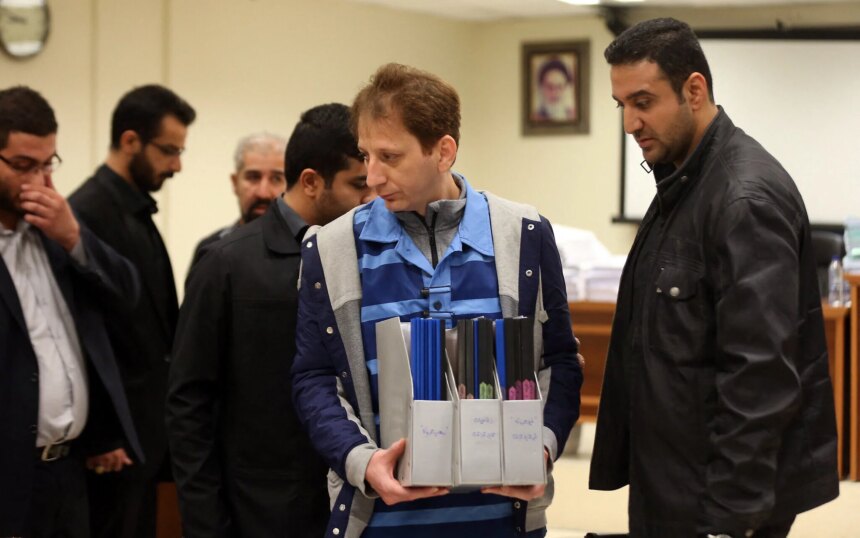
Iranian tycoon Babak Zanjani, who has been sanctioned by the United States for processing funds for Iran’s Revolutionary Guards, has been implicated in conducting cryptocurrency transactions amounting to approximately $850 million through the large crypto exchange platform Binance. These transactions reportedly took place over a span of two years, with a considerable portion originating from a singular trading account that was active for at least 15 months as of January, shortly before the onset of military tensions involving the U.S. and Israel against Iran.
The Wall Street Journal’s investigation highlights how these significant transactions demonstrate Binance’s role as a financial conduit for the Islamic Revolutionary Guard Corps (IRGC). In total, around $425 million is estimated to have been funneled into the Iranian military as a result of these transactions, according to documents disclosed by Binance, law enforcement experts, and other relevant sources.
The transactions were executed through a network of accounts utilized by Zanjani and his associates, including family members, in which they reportedly operated from the same devices. Zanjani, who has played a central role in Iran’s networks of sanctions evasion, was sentenced to death by Iranian authorities in 2016 for embezzlement, although his sentence was commuted in 2024. His ongoing conflict with Iran’s central bank involves accusations of failing to repay significant embezzled sums. In December, he made headlines by posting wallet addresses on social media that led crypto analysts to unveil a sophisticated sanctions-evasion scheme, with Iran’s Nobitex crypto exchange prominently involved.
In a related finding, Zanjani’s network has allegedly enabled the transfer of over $1.7 billion through Binance. This flow has been flagged by internal investigators, with funds reportedly moving from Chinese clients into digital wallets that have been used to finance Iran’s proxies. Earlier reports indicated that Binance dismantled the team that was investigating these suspicious cash flows.
Furthermore, reports from foreign law enforcement indicate that transactions associated with Iranian entities tied to the regime have been traced as recently as this month, highlighting ongoing concerns around Binance’s platform.
Despite the allegations linking Binance to these deceptive transactions, the company has publicly stated that the transactions pertaining to Zanjani “have nothing to do” with their operations and maintains a strict “zero-tolerance” policy towards illicit activities.
In 2023, Binance founder Changpeng Zhao confronted legal troubles in the U.S. related to violations of money laundering and sanction laws but received a pardon from former President Donald Trump. The platform is once again under scrutiny for its potential involvement in facilitating financial activities for Iranian operations. Binance has contributed to the Trump family’s cryptocurrency endeavors, notably World Liberty Financial.
Recent reports have also emerged regarding Nobitex, which is said to have processed around $2.3 billion in transactions involving the BNB Chain and the Tron blockchain, both of which are associated with Zhao and Justin Sun, respectively. The flowing Iranian funds have utilized these digital record-keeping systems amidst ongoing military conflicts, illuminating the complexities of crypto transactions within geopolitical tensions. Meanwhile, regulatory actions towards crypto companies have been notably relaxed under Trump’s administration, as evidenced by settled lawsuits without admissions of wrongdoing from prominent figures like Sun.