A notable risk is emerging in the stock market related to a potential decline in artificial intelligence (AI) spending. As companies continue to ramp up their investments in AI technologies, concerns are starting to surface about the sustainability of this spending, particularly among semiconductor equipment providers, which have seen significant growth.
Recently, Alphabet (NASDAQ:GOOG) disclosed its plans to raise $80 billion through an equity issuance to meet its spending commitments, anticipated to total between $180 billion and $190 billion this year. While increasing its outstanding share count by around 2% might seem minor—especially when considering the company’s substantial share buybacks in recent years—this move is intriguing given Alphabet’s historical propensity to take on debt.
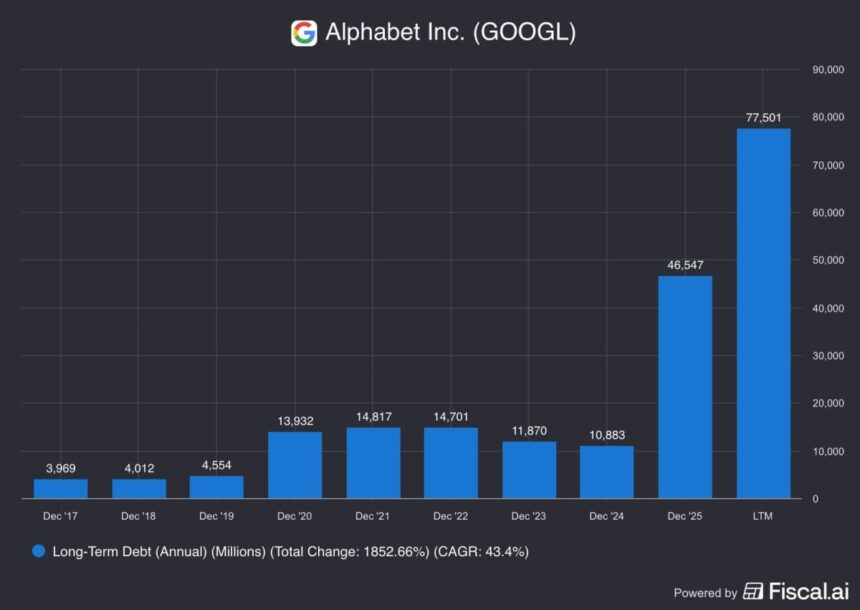
Alphabet has seen a notable increase in its total debt, which has surged from $10.9 billion in 2024 to $77.5 billion. Despite maintaining a solid balance sheet, the decision to raise funds through equity rather than debt suggests a strategic shift in financial management. This raises questions about how long Alphabet can continue to secure cash for its ambitious data center expansion plans, particularly as it seeks to avoid further increasing its debt levels.
The landscape is not confined to Alphabet; major players like Amazon and Microsoft have also expanded their debt to support their spending. This influx of capital has significantly benefited companies involved in developing data centers, with the iShares Semiconductor ETF reflecting a 178% increase over the past year, a stark contrast to the 29% rise in the S&P 500.
Despite the prevailing optimism among big tech firms regarding ongoing investments, the ability to sustain high growth rates in AI and related sectors is under scrutiny. The transition from debt funding to equity financing by Alphabet could signify a shift as companies approach the peak of their AI spending.
For investors, the takeaway is clear: the fundamentals of investing remain unchanged, focusing on identifying undervalued companies based on their future cash flows. While concerns about slowing AI spending are valid—especially regarding semiconductor stocks—the emphasis should remain on long-term strategies rather than short-term market fluctuations.
As for Alphabet, while it may not currently appear as a top investment choice, the company remains robust overall. However, its current financial strategies could have broader implications for the stock market, warranting close observation as the landscape evolves.