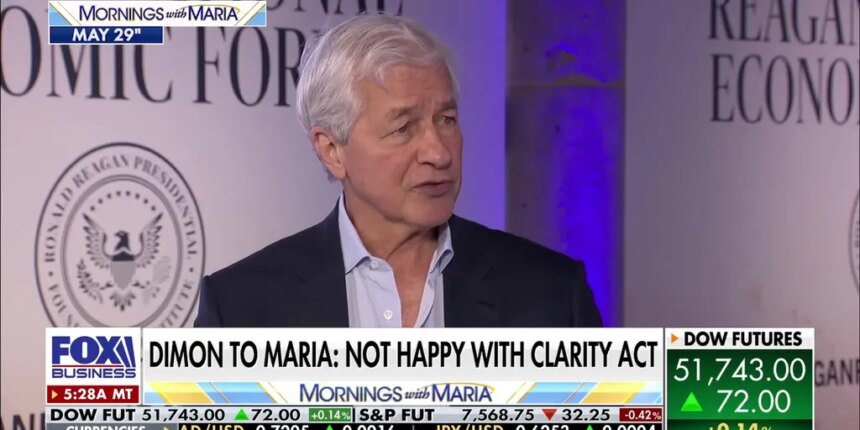
In the ongoing debate regarding cryptocurrency regulation, tensions have emerged between leaders in the banking and cryptocurrency sectors. Jamie Dimon, the CEO of JPMorgan Chase, has publicly expressed his strong discontent with the CLARITY Act, a legislative proposal aimed at clarifying the regulatory framework for digital assets, particularly stablecoins. Dimon argues that the act falls short in safeguarding stablecoins—cryptocurrencies designed to maintain a stable value, often pegged to traditional currencies. He warns that the banking industry will actively oppose the legislation due to these perceived weaknesses.
On the other hand, Brian Armstrong, CEO of Coinbase, a leading cryptocurrency exchange, has responded to Dimon’s critiques with a sense of disappointment. He believes that the CLARITY Act carries significant benefits for traditional banks and is crucial for establishing a more defined regulatory environment for digital assets. Armstrong’s remarks underscore a broader divergence in perspectives on how best to navigate the rapidly evolving landscape of cryptocurrency regulation.
The clash between these two influential figures highlights the complexities associated with aligning the interests of traditional financial institutions and the burgeoning cryptocurrency market. As the financial world continues to evolve, the outcome of this legislative debate could have lasting implications for both sectors, potentially shaping the future of how digital assets are integrated into the mainstream economy.