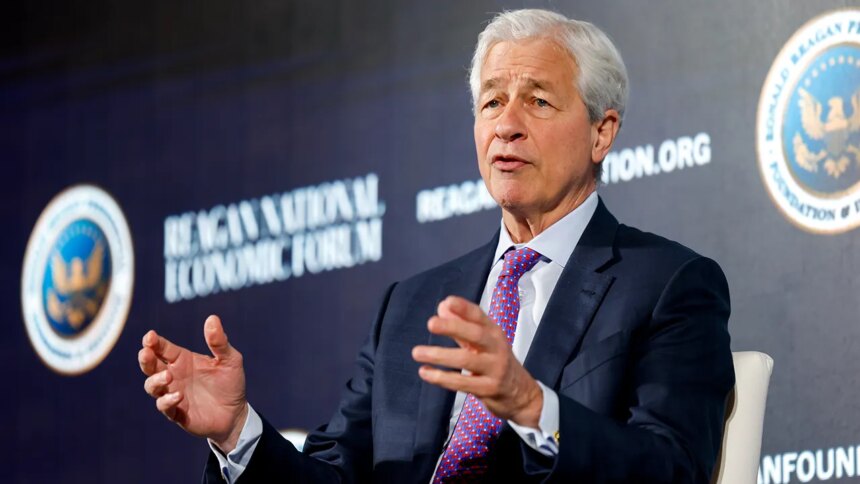
In a recent appearance on FOX Business’ “Mornings with Maria,” Jamie Dimon, CEO of JPMorgan Chase, delivered a pointed criticism of proposed legislation in Congress, the CLARITY Act, which seeks to provide regulatory clarity for digital assets and stablecoins. His remarks focused on an aggressive stance against what he views as inadequate regulatory oversight, especially in relation to the interests of cryptocurrency platforms like Coinbase.
Dimon expressed skepticism towards Coinbase’s lobbying efforts, challenging the company’s narrative that it champions consumer interests. He advocated for a rigorous approach in regulating cryptocurrency, emphasizing that if these platforms wish to operate in a manner similar to banks—collecting customer deposits—they should be held to the same regulatory standards that banks face. “If he wants to be a bank, be a bank,” Dimon stated, highlighting the necessity for compliance with rules concerning capital, legal requirements, and transparency.
The CEO outlined that banks are subject to extensive oversight, aiming for a level playing field where all financial entities adhere to the same set of guidelines. He underscored the risks associated with the current lack of oversight in decentralized cryptocurrency networks, suggesting that this could facilitate illicit activities, including cross-border payments for cartels and human trafficking. Dimon warned that without stringent regulations, these platforms could inadvertently become avenues for crime.
When discussing the legislative specifics of the CLARITY Act, Dimon voiced his discontent, particularly regarding provisions that might allow platforms to pay interest on deposits without adequate legal protections. “The banks will not accept it that way,” he asserted, pointing to the inadequacies of the proposed framework.
Coinbase, represented by its chief policy officer, responded to Dimon’s concerns by emphasizing a shared goal of improving financial conditions for Americans, advocating for regulatory clarity that would ensure consumer protection while fostering innovation.
Dimon’s outspoken views come in the context of a broader discourse on the future of digital finance, the role of artificial intelligence, and pressing issues such as housing affordability. His recent meeting with New York Mayor Zohran Mamdani was also part of this multifaceted discussion, indicating his engagement with local economic issues amidst a rapidly evolving financial landscape.
As discussions around digital currencies and their regulation heat up, Dimon’s strong position signals a significant divide between traditional financial institutions and emerging crypto platforms, with implications for future legislative efforts.