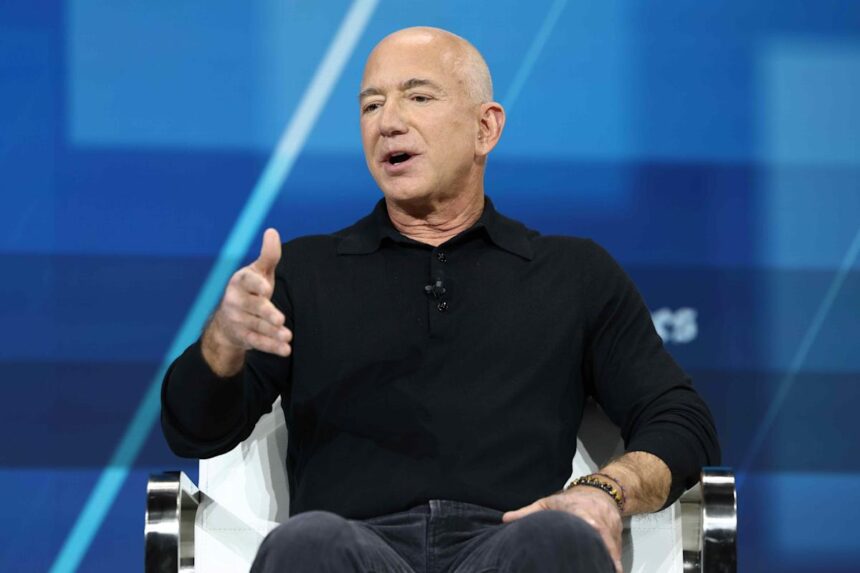
In a surprising twist, Jeff Bezos, the billionaire founder of Amazon and Blue Origin, has stepped into the spotlight advocating for significant tax reforms aimed at supporting lower-income Americans. In a recent interview with CNBC, Bezos put forth a bold proposal to eliminate federal income taxes for the bottom half of earners, aiming to alleviate the financial pressures on struggling households.
Bezos emphasized the importance of providing opportunities for those facing economic hardship, stating, “I want to make sure that the people who are struggling today have a chance…to bring themselves up. We can give them a better chance by eliminating their tax bill.” According to a Tax Foundation report, the bottom half of taxpayers in the U.S. have an average income tax rate of 3.7% and earn adjusted gross income below $53,801. This group includes approximately 76.5 million tax units, who collectively paid around $913 in income taxes on average.
This movement towards tax cuts for lower and middle-income earners aligns with proposals introduced by lawmakers such as Representatives Don Beyer and Chris Van Hollen. Their plan seeks to eliminate federal income taxes for individuals earning under $46,000, joint filers earning under $92,000, and heads of household earning under $64,400. Furthermore, their initiative includes tax discounts for middle-income taxpayers, impacting a broader demographic.
Interestingly, the proposed changes are anticipated to predominantly benefit middle-income households rather than the lowest-income earners. An analysis reveals that many lower-income taxpayers already pay no federal income tax due to various credits and deductions. In fact, it is projected that by 2025, about 40% of households would pay no income tax at all. The financial relief would most significantly impact those in the third quintile of earners, with potential average tax cuts reaching $1,340.
However, the prospect of tax cuts poses challenges. Implementing such proposals necessitates finding alternative funding sources to balance government budgets, particularly since voters typically have mixed feelings about cutting funding for public services. In response, there has been a growing movement in certain regions to increase taxes on wealthier individuals, potentially including billionaires like Bezos, as a means of generating necessary revenue.
Bezos himself has not committed to paying more taxes to facilitate his proposed tax relief for lower-income Americans. When questioned, he remarked on the ongoing debate over what constitutes a “fair share” of tax contributions for the wealthy, suggesting that the country faces more of a spending problem than a revenue one.
As discussions around tax reforms continue, the dialogue sparked by Bezos and supporting lawmakers underscores the complexities of balancing economic support for lower-income households while ensuring sustainable public funding.