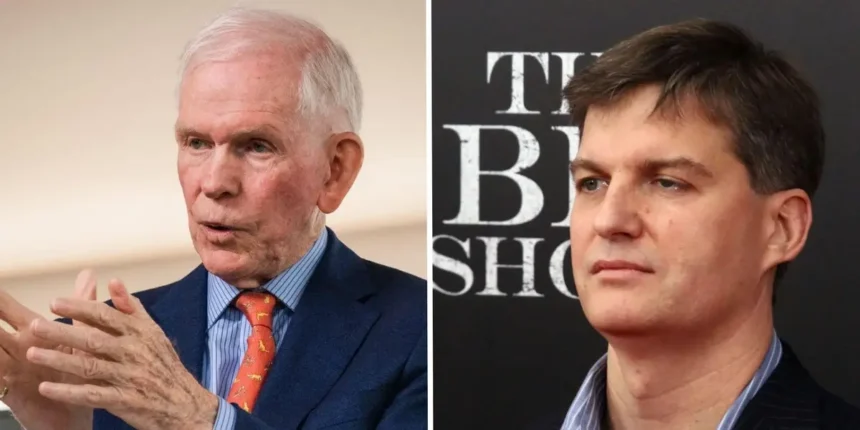
The ongoing bear-hunting season in financial markets has intensified recently, particularly marked by a contentious exchange between Jeremy Grantham, cofounder of asset management firm GMO, and CNBC’s Joe Kernen. Grantham, known for his bearish outlook, appeared on CNBC’s “Squawk Box” where he expressed concern over the soaring investments in artificial intelligence (AI). He warned that early investors could experience substantial losses similar to those seen during the historic railroad and internet booms, predicting a potential 70% crash in tech stocks.
His critical stance extended to cryptocurrencies, labeling Bitcoin as “worthless speculation” expected to dwindle over time. Kernen, a cohost of the show, challenged Grantham’s views, passionately defending the current market trends and questioning the long-term validity of Grantham’s investment warnings. Kernen pointed out that investors who followed Grantham’s advice since 2010 might have suffered significant losses, given the substantial recovery and gains seen in the S&P 500 index, which has surged to record highs from its pandemic lows.
The discussion escalated into a heated argument, with Kernen asserting that Grantham has repeatedly claimed the market was in a bubble, and thus, his warnings might not be practical or helpful. In a moment of frustration, Grantham retorted that Kernen was misinformed about his track record. The tension between the two financial pundits quickly gained traction on social media, with their clash being dubbed “must-watch TV” by observers in finance circles.
In a separate but related spotlight, Michael Burry, renowned for his foresight during the 2008 financial crisis depicted in “The Big Short,” has been addressing criticisms over the originality of his trades. Burry has been vocal about his role in developing the strategy involving credit default swaps (CDS) against subprime mortgage-backed securities. Responding to a comment regarding his “lone wolf” status, Burry clarified that while he did share his ideas with several prominent investors—including John Paulson and Peter Thiel—he was indeed the originator of that specific trade.
Support has emerged for Burry’s claims, particularly from derivatives expert Janet Tavakoli, who commended him as a pioneer for focusing on vulnerable subprime mortgages when most investors were oblivious. Similarly, other investors echoed that Burry had persistently attempted to educate them on potential market pitfalls.
Burry has since shifted his focus from managing a hedge fund to writing on Substack, using the platform to issue warnings about an impending collapse of the AI bubble, even making short bets against companies like Nvidia and Palantir. His confrontations with industry figures, including harsh critiques from Elon Musk and Palantir CEO Alex Karp, highlight the contentious atmosphere surrounding bearish predictions in today’s market.
As the market continues to rise amid bullish sentiment, the backlash against bears like Grantham and Burry underscores a broader skepticism toward their predictions. The ultimate fate of their forecasts remains uncertain, as market dynamics evolve and investor confidence fluctuates.