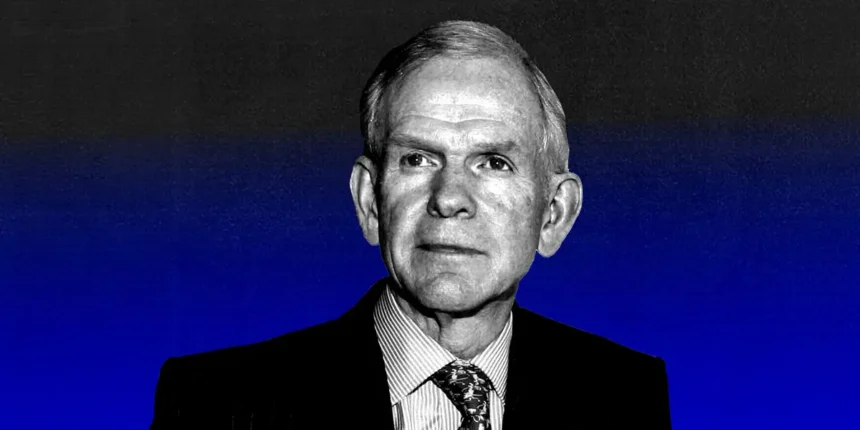
In a recent episode of the “Merryn Talks Money” podcast, veteran investor Jeremy Grantham voiced concerns over the current enthusiasm surrounding artificial intelligence (AI), describing it as one of the largest bubbles in economic history. Grantham, co-founder of GMO and a respected market historian, contended that the fervor for AI mirrors other pivotal innovations, such as the railroad and the internet, which were also characterized by significant but volatile investment bubbles. He warned that the bursting of the AI bubble could have dire implications for the stock market.
Grantham articulated his view that bubbles form from serious ideas, rather than mere gimmicks. He noted that the more substantial the underlying concept, the larger the ensuing bubble, leading to significant financial fallout when it ultimately deflates. He underscored the “iron law” of asset prices: that when an asset doubles in price, subsequent returns are halved. “If you want to have the highest market in history, you will have the lowest returns in history going forward,” he cautioned, adding that the stock market is likely to become significantly cheaper in due time.
Reflecting on the recent hype triggered by the release of OpenAI’s ChatGPT, Grantham pointed to the surge in investment in AI technologies. He asserted that while this excitement delayed a potential economic downturn, it had also inflated profit margins for major technology firms to excessive levels. “The probabilities that AI will not bust are slim to none,” he remarked, predicting that companies like Nvidia will be at the forefront of the market decline, followed by others in the sector.
Grantham also highlighted the influence of institutional inertia and herd mentality in the investment community. He suggested that many professionals are hesitant to challenge current valuations due to the fear of underperformance against their peers, leading them to participate in what he described as a collective denial of market sensibility. “As long as the music’s playing, they’re going to be dancing,” he said, indicating that despite knowing the market is unsustainable, investors continue to ride the wave.
His warnings align with views expressed by other prominent industry figures, including Michael Burry, known for predicting the 2008 financial crisis, who share similar concerns about overvalued AI stocks and the potential for a market setback. Despite these cautionary voices, the U.S. stock market has shown resilience, with the S&P 500 climbing approximately 80% over the past five years.
Contrasting these bearish sentiments, investors like Kevin O’Leary and Ross Gerber have defended the current landscape of AI investments. O’Leary suggested that the productivity gains from AI can be measured concretely, while Gerber pointed to the remarkable growth potential and profitability of AI companies as justifying their high valuations. As the debate over the viability and future of AI stocks continues, the contrast between skepticism and optimism illustrates the complexities of navigating this rapidly evolving market landscape.