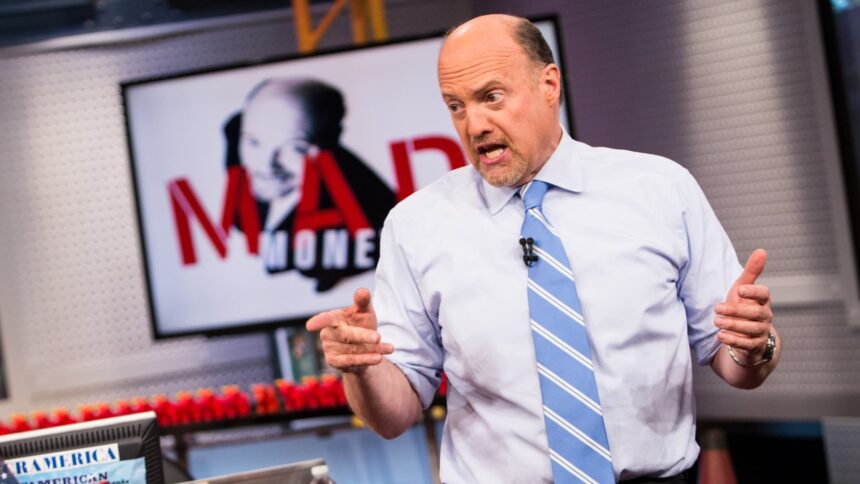
In a recent discussion, CNBC’s Jim Cramer emphasized the importance of investing in companies capable of delivering resilient revenue and earnings streams, irrespective of prevailing economic conditions. He articulated the qualities that define a robust secular growth stock, which he believes can provide long-term investment opportunities.
Cramer indicated that investors should seek out growth stories that demonstrate adaptability in the face of high interest rates or economic downturns. He noted that such companies should ideally possess the capacity to scale, suggesting that they demonstrate potential for substantial growth over time. “These are the kinds of stocks you can own for years, or even decades, racking up tremendous gains,” he said. However, he also cautioned investors to conduct thorough research to ensure they are prepared to pivot if a company encounters significant issues.
Cramer pointed out that companies able to withstand significant interest rate hikes often have less reliance on borrowing, as their customers are not heavily dependent on financing for purchases. While he recognized that borrowing can be a valid strategy for some firms—citing Amazon and Tesla as examples—he underscored that these companies had immense opportunities ahead of them. In contrast, he criticized firms like AMC for using borrowed funds merely to maintain operations, implying that such financial practices are unsustainable.
To assess a company’s resilience to adverse economic climates, Cramer encouraged investors to examine historical performance during previous downturns, such as the aftermath of the financial crisis and the brief recession due to the COVID-19 pandemic. He stated that it is acceptable for a stock to have experienced declines as long as it managed to recover swiftly once the market stabilized.
Cramer also discussed the critical trait of scalability. A company with the capacity to expand into a more significant player in its market can be an attractive investment. He specifically mentioned a group of companies he refers to as the “Magnificent Seven,” asserting that once investors identify such firms capable of navigating economic fluctuations, they should feel confident investing in them, even if their valuations appear high. “Wall Street’s willing to pay through the nose for consistently strong earnings growth, and, you know what, you should, too,” he added, reinforcing his viewpoint on strategic investment choices.
Investors looking for long-term gains are encouraged to align their portfolios with companies equipped to thrive in various economic environments, ensuring they remain informed and vigilant in their investment approaches.