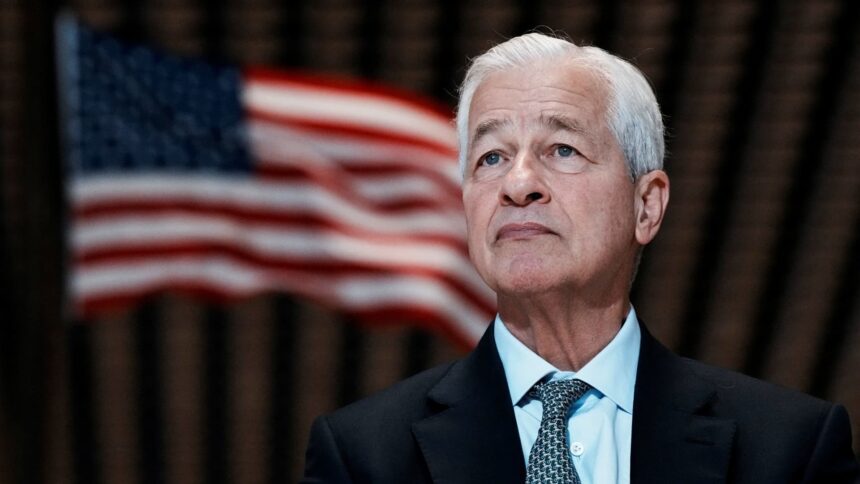
During a recent investment conference hosted by Norway’s sovereign wealth fund, Jamie Dimon, the Chairman and CEO of JPMorgan Chase & Co., expressed concerns over rising government debt levels worldwide, emphasizing the potential for a looming bond market crisis. His remarks came in response to inquiries about the implications of increasing debt both globally and within the United States.
Dimon noted, “The way it’s going now, there will be some kind of bond crisis, and then we’ll have to deal with it.” He underscored the importance of proactive measures, stating that policymakers should address these issues before market forces compel them to act. “I just think maturity should say you should deal with it, as opposed to let it happen,” he added.
As the leader of the world’s largest bank by market capitalization, Dimon highlighted the myriad risks contributing to current economic tensions, including geopolitical instability, oil prices, and government deficits. He noted that while some factors may subside, the unpredictability of events could precipitate a crisis if left unaddressed. His comments serve as a caution against complacency, suggesting that failure to act could lead to a more chaotic situation.
Dimon elaborated on the ramifications of a bond crisis, which he described as a scenario involving a sharp increase in yields and a collapse of market liquidity. This situation typically sees investors hastily selling assets while potential buyers withdraw from the market, necessitating intervention from central banks as “buyers of last resort.” He drew parallels to the 2022 U.K. gilt crisis, where a rapid surge in government bond yields forced the Bank of England to step in to stabilize the situation.
In addition to discussing debt and bonds, Dimon touched on risks associated with the current credit cycle, noting that although private credit currently amounts to about $1.7 trillion—considered manageable—it is the universal downturn across lending sectors that poses a significant threat. He suggested that a future credit recession could be harsher than anticipated due to the prolonged period since the last downturn. “We haven’t had a credit recession in so long, so when we have one, it would be worse than people think,” he cautioned. “It might be terrible.”
Dimon’s insights are particularly relevant as the global economy contends with various uncertainties, calling for vigilant monitoring and strategic policymaking to mitigate potential crises.