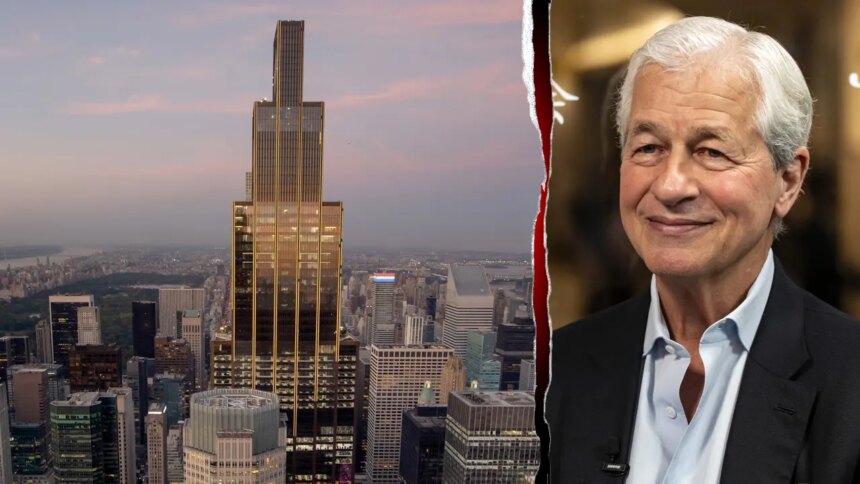
The competition to determine the next leader of JPMorgan Chase is heating up as the bank takes notable steps in its succession planning. Recent reports indicate that the promotion of Doug Petno and Troy Rohrbaugh to co-presidents of the bank is seen as a clear signal that both executives are now key contenders to succeed Jamie Dimon, who has been at the helm for more than 20 years.
In a significant move, Dimon announced the retirement of Marianne Lake, a prominent executive and once a frontrunner for the CEO position. Lake, who previously led the consumer and community banking division, reportedly expressed dissatisfaction with her exclusion from the top job. Her lack of a public statement after Dimon’s announcement underscores the tension surrounding her departure from consideration for the CEO role.
In addition to Lake, other senior executives such as Jenn Piepszak, JPMorgan’s chief operating officer, and Mary Erdoes, head of the asset and wealth management divisions, are also now considered out of the running to replace Dimon. This narrowing of candidates comes as the bank emphasizes its commitment to leadership development and a thoughtfully planned succession process, as articulated by Dimon in a recent press release.
Petno and Rohrbaugh arrive at this pivotal stage in the bank’s history having jointly managed its robust consumer and investment banking operations. Their new titles are pivotal, as they not only elevate their status within the bank but also set the stage for a competitive vie for CEO—a race that Dimon has orchestrated intentionally, according to insiders.
The task ahead for Petno and Rohrbaugh is immense. Dimon, often regarded as the most significant banker in the United States, has led JPMorgan through numerous economic challenges since taking office in 2006. His leadership style is characterized by a direct approach and strategic acumen, which helped JPMorgan maintain profitability and navigate controversies with minimal scandal throughout his tenure.
As the nation’s largest bank, JPMorgan Chase plays a critical role in various facets of the financial landscape, from consumer lending to global trading. As the bank prepares for a potential transition, the influence and effectiveness of its new co-presidents will be closely monitored by investors and industry observers alike. With Dimon’s future as chairman still uncertain, the dynamics at JPMorgan Chase are evolving, setting the stage for an exciting and pivotal chapter in the bank’s history.