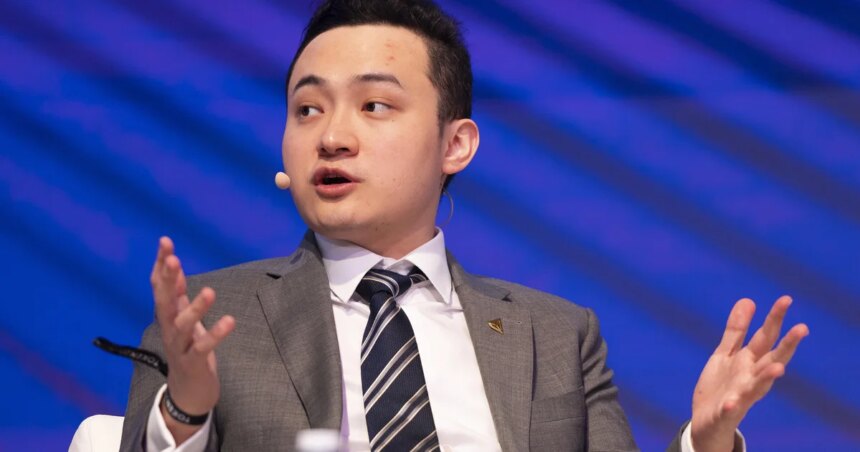
Cryptocurrency billionaire Justin Sun has initiated legal proceedings against World Liberty Financial, a crypto venture co-founded by former President Donald Trump and his sons. The lawsuit, filed in California federal court, accuses World Liberty Financial of unlawfully preventing Sun from selling digital tokens valued at up to $1 billion. The complaint also claims the company pressured him to invest “hundreds of millions of dollars” in the creation of USD1, World Liberty’s stablecoin.
Sun contends that World Liberty Financial froze his tokens after he declined to invest further in the business. Additionally, the lawsuit alleges that the company secretly altered the contractual terms governing the sale of its tokens, enabling it to blacklist certain holders from making transfers. The complaint states there was no formal governance proposal or vote among token holders regarding this power, asserting that World Liberty unilaterally made this decision without informing token owners.
In response, World Liberty Financial has rejected Sun’s claims, labeling them as “entirely meritless.” Co-founder and CEO Zach Witkoff stated on social media that Sun’s lawsuit reflects a “desperate attempt to deflect attention from Sun’s own misconduct,” contending that the company’s actions were necessary to protect itself and its users. Co-founder Eric Trump also took to social media, expressing pride in the company’s team while mocking Sun’s previous purchase of a banana taped to a wall, which cost $6 million.
Sun, who remains a supporter of Trump, pointed fingers at unnamed individuals within World Liberty Financial for the issues he encountered. He claimed that they wrongfully froze his tokens and stripped him of his voting rights on governance matters, alleging threats to permanently destroy his tokens. Sun stated he does not believe Trump would endorse such actions if made aware of them.
The lawsuit also accuses World Liberty Financial executives of exploiting the Trump brand to generate profits illegally. Sun characterized his support of the company as instrumental to its early success, noting that the demand for its tokens was initially disappointing, leading to only $22 million in sales within the first month. After Sun acquired $45 million in tokens, however, investment interest increased, propelling the total raised by the company to approximately $550 million.
Once the World Liberty tokens became tradable on September 1, Sun claims he found himself unable to sell them, asserting that his businesses are now at risk of not realizing potential value from their tokens, which have previously been valued at $1 billion. Since their trading debut, the $WLFI tokens have reportedly lost about 25% of their value.
Additionally, the complaint suggests that World Liberty Financial engaged in borrowing at least $75 million in stablecoins by pledging a significant amount of its $WLFI tokens as collateral, subsequently converting some of those funds into cash. This practice could exert downward pressure on the token’s price, complicating trading conditions for holders. The lawsuit raises concerns about World Liberty’s financial stability, indicating that it may struggle to fulfill its obligations, with the complaint calling for the court to prevent the company from invalidating Sun’s tokens.
With this legal dispute unfolding, the implications of Sun’s lawsuit could pose risks for his ties to Trump and have far-reaching effects for both parties involved in this high-stakes cryptocurrency saga.