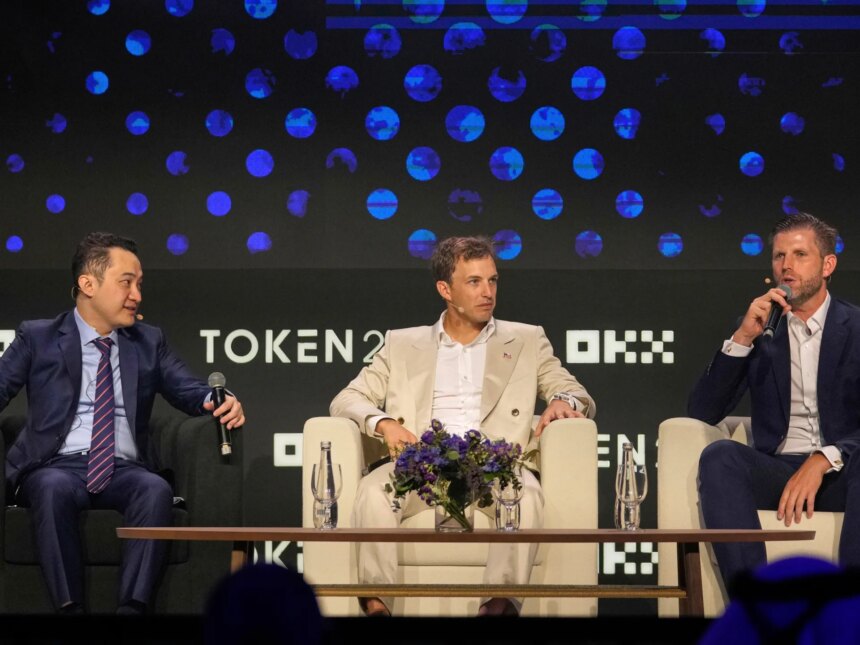
In a major legal development within the cryptocurrency sector, entrepreneur Justin Sun has filed a lawsuit against World Liberty Financial, a digital currency initiative co-founded by former President Donald Trump and his family. The complaint, submitted in a federal court in California, centers around allegations that World Liberty unlawfully froze Sun’s holdings of WLFI tokens, which he claims were improperly restricted by the company.
Sun, known as the founder of the Tron cryptocurrency, asserts in the lawsuit that World Liberty covertly employed mechanisms to prevent him from selling his tokens after they became tradable in September 2025. He further alleges that the company threatened to “burn” his holdings, an act that involves permanently deleting the tokens from existence, even as they remained in Sun’s digital wallet.
The lawsuit details Sun’s significant financial investment, noting that he purchased $45 million worth of WLFI tokens—approximately 3 billion tokens—and was awarded an additional 1 billion tokens upon being named an advisor to World Liberty. As of the latest calculations, Sun’s total portfolio of the WLFI tokens is valued around $320 million.
World Liberty Financial, however, has publicly contested Sun’s claims, asserting he has neither served as an advisor nor held any operational role within the company. A spokesperson for World Liberty declined to comment further on the pending lawsuit, while the White House has not responded to inquiries regarding the matter.
World Liberty has emerged as one of the more lucrative cryptocurrency businesses tied to the Trump family, reportedly generating over $1 billion in revenue. Insights from a Reuters analysis reveal that 75% of the revenue from WLFI token sales is directed to the Trumps. Nonetheless, the firm has faced scrutiny from investors who have expressed concerns regarding a perceived lack of transparency and centralized governance, along with insufficient responses to community complaints.
In his lawsuit, Sun describes his role as “one of World Liberty’s anchor investors.” However, the legal framework surrounding WLFI tokens indicates that they do not equate to standard company shares; token holders are not entitled to ownership or dividends but are afforded limited governance rights.
The relationship between Sun and World Liberty has soured dramatically over recent months. In September, Sun accused the company of imposing restrictions on his token holdings. Earlier this month, he claimed via social media that World Liberty had secretly implemented a “backdoor blacklisting function” in the blockchain contracts, granting the company unilateral authority to freeze or confiscate token holders’ rights without justification.
In response, World Liberty issued a statement on social media asserting their confidence in their contractual position and hinting at readiness for a court battle.
The lawsuit indicates that World Liberty had pressured Sun to invest additional funds into the venture, including soliciting a $200 million commitment for a separate stablecoin project. Despite attempts to resolve the situation amicably and requests for the company to unfreeze his tokens, Sun reported that World Liberty declined to accommodate his requests.
Recently proposed measures by World Liberty would restrict early investors—collectively holding 17 billion tokens—from trading them until 2030, raising concerns among Sun and other investors. Sun has vehemently opposed this governance proposal but has been unable to voice his dissent due to the freezing of his tokens.
Alongside his dealings with World Liberty, Sun has made significant investments in various ventures associated with Trump’s political resurgence, including those involving crypto-friendly policies since Trump’s return to the White House in early 2025. Prior to these developments, Sun settled a lawsuit with the Securities and Exchange Commission for $10 million over allegations of fraud and selling unregistered crypto securities. Despite the settlement, he made no admission of wrongdoing.