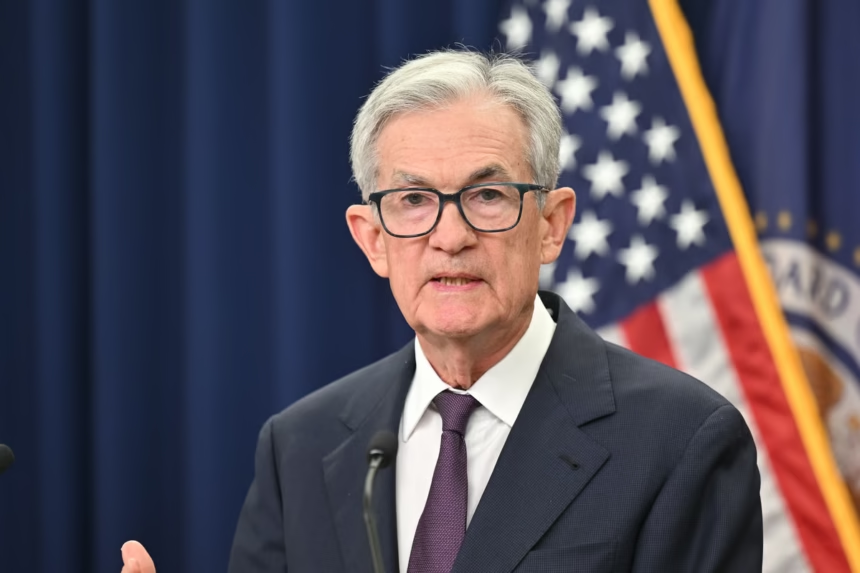
Kevin Warsh is poised to become the next chairman of the Federal Reserve following his approval by the Senate Banking Committee. Pending confirmation by the full Senate, Warsh is expected to succeed Jerome Powell, who has held the position since 2018, with a transitional date set for May 15. Despite the change in leadership, Powell will remain a member of the Federal Open Market Committee (FOMC), which is responsible for shaping the Fed’s monetary policies, providing a potential for contrasting views on key fiscal strategies moving forward.
Warsh’s nomination raises significant discussions around his differing perspectives on one of the critical tools the Fed employs for managing economic conditions: its balance sheet. While Powell has utilized this tool by purchasing long-term government bonds and mortgage-backed securities to influence interest rates indirectly, Warsh has expressed skepticism about the balance sheet’s effectiveness in achieving the Fed’s dual mandate of maintaining full employment and price stability. He criticized the current strategy, arguing that it has not been beneficial and advocating for a reduction in the Fed’s asset holdings, which currently exceed $6 trillion.
This shift in policy could have profound ramifications for financial markets. A large-scale sell-off from the Fed’s balance sheet could pressure bond prices, leading to increased effective interest rates. Historically, attempts to reduce the balance sheet have met with market volatility, including notable spikes in short-term interest rates. Warsh has acknowledged the complexities involved in unwinding these assets without creating disruptive consequences for investors.
The potential impact of Warsh’s leadership extends beyond bonds to stock markets. As investors often evaluate asset prices relative to risk-free rates offered by Treasury bonds, an increase in long-term interest rates could lead to a decrease in equity valuations. Growth stocks, which are anticipated to generate significant future earnings, could particularly suffer if these earnings are discounted at higher rates. Consequently, indices such as the S&P 500 and Nasdaq Composite may experience declines in value.
Moreover, elevated long-term rates could result in increased borrowing costs for consumers and companies alike, potentially curtailing consumer spending and slowing corporate earnings growth. Conversely, if higher long-term rates allow the Fed to lower the target federal funds rate, some pressure on the economy could be eased. In such a scenario, lower short-term borrowing costs coupled with a steepening yield curve could present opportunities for value stocks, which tend to outperform in a rising rate environment.
As Warsh prepares to take the helm at the Federal Reserve, investors are encouraged to recalibrate their portfolios in anticipation of a transition in monetary policy. With the likelihood of ideological clashes between Warsh and Powell, the coming months hold significant uncertainty regarding the future direction of the Fed. The decisions made under Warsh’s leadership could effectively shape both the economic landscape and individual investment strategies in the near future.