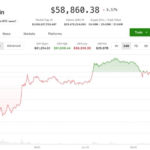
Bitcoin has evolved significantly over the years, transitioning from a niche investment among retail investors to a more accepted option among institutional players. This shift has coincided with a decrease in its volatility, contributing to a growing willingness among investors to include it in their portfolios, despite its historical reputation for riskiness.
A prominent figure who has recently adjusted his perspective on Bitcoin is Larry Fink, the Chief Executive Officer of BlackRock. Previously skeptical about the cryptocurrency, Fink now acknowledges its potential role in investors’ portfolios. During a recent press event, he characterized Bitcoin as an “asset of fear,” implying that individuals may invest in it as a safeguard against threats to their physical and financial security. This marks a stark contrast to his earlier views in 2017, when he suggested that Bitcoin was primarily utilized by criminals for money laundering.
Fink’s acknowledgment of Bitcoin aligns with its perceived value as a diversification tool, especially during economic uncertainty. The cryptocurrency experienced an impressive surge in value in 2025, reaching unprecedented heights, even as broader economic concerns lingered. This draws an intriguing connection between investor sentiment—particularly fear—and Bitcoin’s price dynamics.
However, there are critical issues arising from Fink’s assertions. If Bitcoin truly were a safe haven asset akin to gold, one would expect it to demonstrate resilience during periods of market distress, providing an inverse reaction to declines in traditional markets such as the S&P 500. Yet, this correlation has not materialized. In 2022, when the S&P 500 plummeted by 19% due to various economic pressures, Bitcoin did not serve as a refuge for investors; instead, it depreciated by an alarming 65% over the same period. An additional example is noted in late 2025, where the S&P 500 posted a modest 2% gain while Bitcoin fell by 23%. These trends suggest that fear does not consistently act as a positive driver for Bitcoin’s value as previously posited by Fink and other supporters.
Although Bitcoin’s popularity has surged, indicating a maturation of the market, it remains a highly volatile and speculative investment. The substantial price swings experienced in 2022 highlight its potential to increase risk rather than mitigate it within a diversified portfolio. For many investors, diversifying into cryptocurrencies like Bitcoin may introduce new uncertainties, particularly given the unpredictable nature of crypto markets.
While Bitcoin might appeal to those who embrace its volatility, the majority of investors may find greater security in avoiding it altogether.
Even amid growing endorsements from influential figures, this cryptocurrency’s status as a safe investment remains tenuous, inviting scrutiny about its capability to effectively mitigate risks in an investment portfolio.