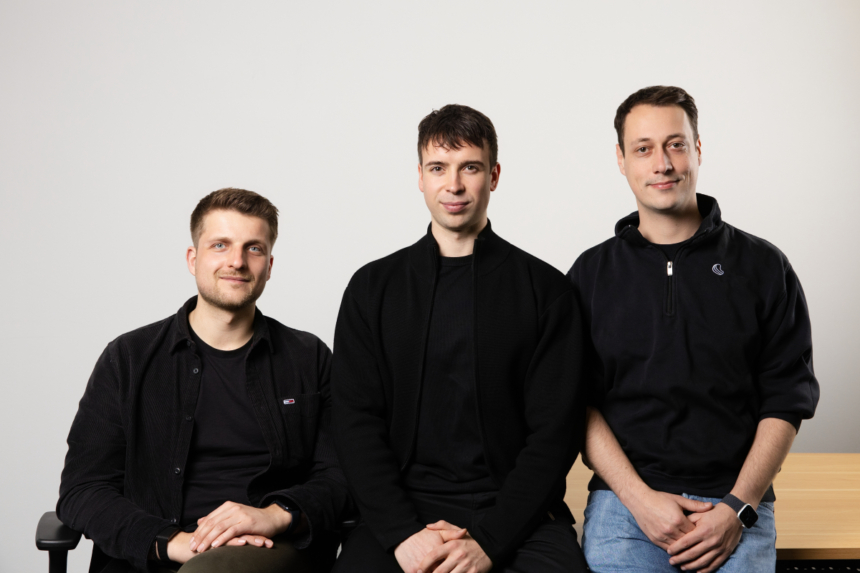
Lio’s co-founders have embedded their experiences within large corporations into the core of their business, recognizing that procurement—the method by which enterprises acquire services from vendors—often presents substantial hurdles. Co-founder and CEO Vladimir Keil highlights his firsthand encounters with the cumbersome nature of procurement both during his tenure at a large company and while establishing his initial startup.
As he recalled, “When we were selling enterprise software, we had to go through procurement ourselves and saw how manual and fragmented the process still is.” In response to these challenges, Keil and his team have crafted an automated platform employing AI agents—software designed to perform tasks autonomously on behalf of users—to streamline these inefficient processes.
In a significant development, Lio recently secured $30 million in a Series A funding round led by Andreessen Horowitz, with participation from SV Angels, Harry Stebbings, and Y Combinator, following its inclusion in the Spring ‘23 batch. With this latest funding, Lio’s total capital raised amounts to $33 million. Keil indicated that the new resources will fuel the company’s expansion throughout the U.S. and enhance the capabilities of its AI agents, which are intended to manage the entire procurement workflow for enterprise clients.
At the heart of enterprise expenditures, procurement involves various aspects, from acquiring raw materials to professional services. Each purchase order necessitates meticulous attention, often requiring the use of Enterprise Resource Planning (ERP) systems, contract management solutions, supplier databases, and other compliance checks, not to mention sifting through emails.
Despite the advent of modern eProcurement tools, Keil points out that much of the labor involved remains manual. Organizations frequently respond by establishing large internal teams or outsourcing these responsibilities, leading to a tedious and costly process. Keil proposed that given the unstructured nature of procurement data and the repetitive workflows involved, these tasks would be ideally suited for AI agents to manage.
Joined by co-founders Lukas Heinzmann and Till Wagner, Keil launched Lio in 2023, introducing a virtual procurement workforce that uses an AI-native platform with agentic infrastructure to execute the entire procurement process autonomously. “Every previous generation of procurement technology was built on the same assumption: that humans will do the work and technology will assist them in expediting it,” Keil noted. “We take a fundamentally different approach. Instead of building software to help humans do procurement work faster, Lio deploys AI agents that execute the workflow themselves.”
These Lio agents are capable of operating across various enterprise systems, reading documents, evaluating suppliers, negotiating terms, and completing transactions. Keil highlighted the transformative efficiency of Lio’s technology, stating, “Processes that once took weeks can now be completed in minutes.” The startup has already begun aiding organizations in managing billions in enterprise spending, with one global manufacturer reportedly able to automate 75% of its previously outsourced procurement operations within just six months.
Lio is part of a growing cohort of companies aiming to revolutionize enterprise software, leveraging agentic AI to fundamentally change the functioning of enterprise application software. Keil views Lio’s competition as residing primarily in traditional procurement software vendors like SAP Ariba and Oracle, Business Process Outsourcing (BPO) firms, and consulting agencies that assist companies with procurement operations.
By transforming procurement from a traditionally back-office function into a vital component of enterprise performance, Keil believes that organizations can reallocate their time from processing requests and paperwork to engaging in more negotiations, analyzing additional suppliers, and seizing savings opportunities that would have otherwise gone unnoticed.