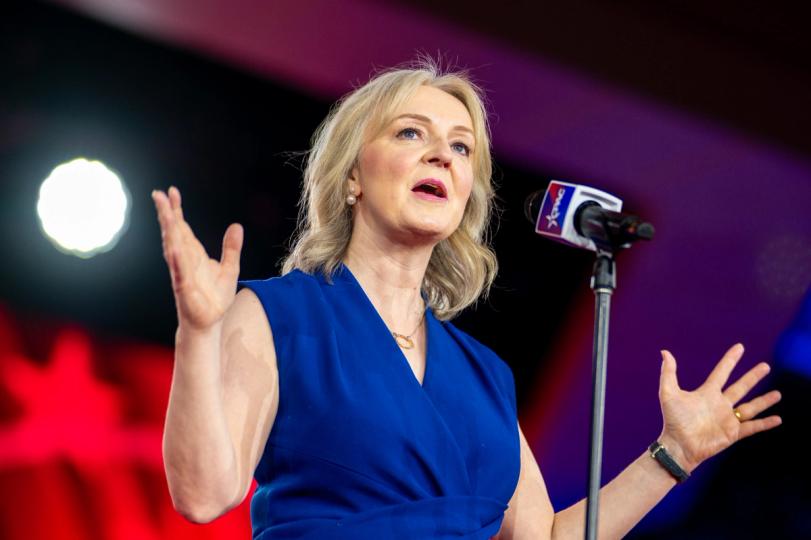
In a recent interview, Liz Truss, distinguished as the United Kingdom’s shortest-serving prime minister, expressed her deep concerns regarding the long-term stagnation of the British economy, attributing many of the root issues to what she describes as the “debasement of currency.” Truss emphasized that the erosion of sterling’s value has largely stemmed from inflation and the continuous printing of new banknotes.
Having led the Conservative government for only 45 days in 2022, Truss maintained her stance on how these financial dynamics have fueled her interest in bitcoin. Currently valued at approximately $76,183.43, bitcoin is viewed by some as a potential safeguard against currency debasement. Truss mentioned that she first encountered the cryptocurrency while working at the Treasury, where she sought to introduce discussions about it to disrupt traditional financial conversations.
“A lot of the problems we have are due to the debasement of our currency and lack of sound money,” Truss stated, critiquing the absence of serious dialogues about monetary policy, which she deems crucial for economic prosperity. She expressed concern that these discussions have become almost “sinister,” treated as a taboo in government circles despite their central importance in shaping economic conditions.
Delving deeper into her economic philosophy, Truss highlighted the increasing “centralized control” surrounding financial practices today, arguing that such regulation and taxation have impeded financial independence. She warned that the current trajectory of the U.K. economy is “very negative,” characterized by weak growth and rising state intervention, which she believes will lead to a long-term decline if not addressed.
Truss pointed to discouraging factors for entrepreneurs, citing high taxes, stringent regulations, and soaring energy costs as contributing to a landscape where “the risk often isn’t worth the reward.” “There’s a massive disincentive to work in this country,” she lamented, reflecting her broader concerns about the economic climate.
Addressing the chaotic aftermath of Chancellor Kwasi Kwarteng’s controversial mini-budget during her premiership, Truss argued that it merely revealed existing vulnerabilities in the financial system rather than creating new ones. “There was a tinderbox in the system that people didn’t know about,” she explained, referencing risky leveraged pension strategies that exacerbated the situation.
Now focusing on her new political aspirations, Truss is working on building a grassroots movement through initiatives such as CPAC UK—a three-day conference designed to unite activists, entrepreneurs, and advocates of sovereignty and liberty. She stressed the need to rally people who truly understand the economic challenges facing the country, framing the stakes of her mission emphatically: “There are two choices, either we’re finished or we change it.”