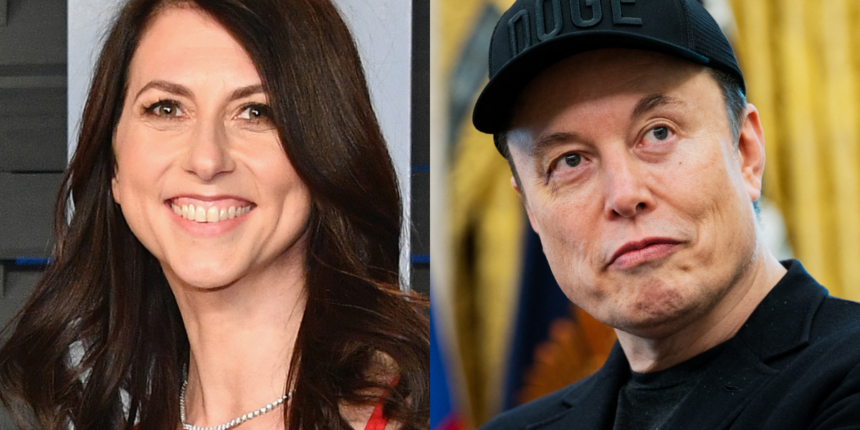
MacKenzie Scott has emerged as a leading figure in contemporary philanthropy, having donated over $26 billion in recent years to a wide array of organizations through her initiative, Yield Giving. Her generous contributions have been described as life-altering by many of the recipients, particularly those that had never received such significant funding before. However, her approach to philanthropy has sparked a range of opinions, including criticism from prominent figures in the tech industry.
Elon Musk, the world’s first trillionaire, has publicly expressed skepticism regarding Scott’s philanthropic impact. In a response to a recent post by Pubity—a viral media brand that highlighted Scott’s status as one of the largest individual donors in history—Musk echoed sentiments from a Twitter user, @FrenlyOfficer, who questioned the net benefit of Scott’s donations, stating, “Unfortunately, she’s spending it making the world a worse place.” Musk responded affirmatively, adding, “Sadly, yes.”
Despite his significant wealth, Musk has articulated challenges associated with philanthropy. Shortly after securing an unprecedented pay package from Tesla in 2025, he shared during a podcast interview that he finds it difficult to give money in a way that genuinely benefits society. He emphasized the contrast between appearances and reality in effective charitable giving, stating, “It’s very easy to give money away to get the appearance of goodness. It is very difficult to give money away for the reality of goodness. Very difficult.”
In contrast, Scott is widely celebrated for her innovative approach to giving, which eschews traditional barriers often associated with large donations. Recipients of her funds typically receive grants without the usual bureaucratic hurdles, allowing them to utilize the resources more effectively.
Melinda French Gates has also commented on the philanthropic landscape among the ultra-wealthy. She has expressed disappointment with those who signed the Giving Pledge—a commitment by billionaires to donate the majority of their wealth—but who have yet to fulfill that promise. In an interview, she articulated her belief that while some have indeed given generously, others have fallen short.
Despite her critiques, French Gates acknowledged the commendable nature of Scott’s contributions. She referenced Scott’s specific focus on historically Black colleges in the United States, highlighting the tangible impact of her donations.
French Gates stated, “Actions speak louder than words,” emphasizing that while some philanthropists may keep their grant-making behind the scenes, their actions are making a substantial difference. The contrasting approaches of Scott and Musk illuminate the broader debate surrounding the role of philanthropy in addressing societal challenges, with differing perspectives on both the capability and obligation of the wealthy to effect change.