A man from Maine is bravely sharing his experience after falling victim to a romance scam that cost him nearly $27,000, largely through cryptocurrency transactions. The man, Peter Carrier, hopes that by revealing his story, he can help others avoid a similar fate.
In his early 70s, Carrier believed he had found love when he connected with a woman on Facebook, who posed as a single mother living in Florida. He was drawn into conversations that felt genuine, partly because he had initiated contact himself. Although he was aware of the risks associated with online interactions, he believed he had taken the necessary precautions to ensure the relationship was real. “I kind of checked into different parts of our relationship, you know, just to try and verify, is this real?” he explained.
Initially, the woman asked Carrier for a small favor—a gift card for a video game for her 9-year-old daughter. However, requests soon escalated for more significant sums of money. Each time, she suggested they could benefit mutually from the transactions, promising a future together filled with travel and happiness. “We can go here, we can go there, you know, it’ll be great,” she told him. Carrier eventually found himself sending significant sums through a Bitcoin kiosk, which he was led to believe was the fastest way to help her.
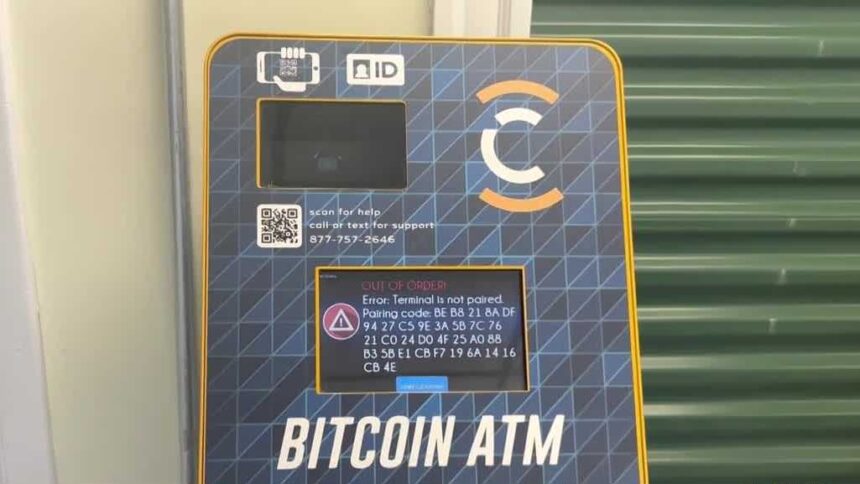
Carrier located a Bitcoin kiosk about 30 minutes from his home, situated in the back of a laundromat in Lisbon Falls. He deposited cash into the kiosk, converting it to cryptocurrency, unaware of the significant trap he was walking into. Linda Conti, superintendent of the Maine Bureau of Consumer Credit Protection, emphasized that these transactions are particularly treacherous. “You can trace the transaction, but you never know who has the wallet,” Conti noted, expressing concern that many transactions involving cryptocurrency are linked to scams.
The potential for anonymity in cryptocurrency transactions makes them a common tool for scammers. Conti pointed out that such scams aren’t limited to romance scams but also include impersonation and investment schemes that collectively cost Americans millions. The Federal Bureau of Investigation reported that in 2025, scams involving cryptocurrency ATMs led to losses of at least $389 million, with older adults being the most vulnerable group.
In response to the growing issue, Maine has started to enact stricter regulations on cryptocurrency ATMs, capping fees at 3% per transaction and limiting daily withdrawals to $1,000. A recent settlement with Bitcoin Depot garnered $1.9 million to be distributed to victims, but vigilance is still lacking. Conti highlighted that many residents remain unprotected against losses stemming from cryptocurrency apps on their phones, as current regulations often don’t apply to these platforms.
Local lawmakers are attempting to address the regulatory gaps. A spokesperson for Rep. Chellie Pingree stated that while there is no current House legislation specifically addressing this issue, she supports efforts to strengthen consumer protection funding. Conversely, comments from Sen. Susan Collins acknowledged a focus on senior consumer protections without specific initiatives related to cryptocurrency.
Despite the efforts, Carrier remains devastated and has yet to recover any of his lost funds. He was too embarrassed to keep physical evidence of the scam, deleting all text messages and receipts. His ultimate message to others is one of caution: “It is embarrassing, but you really shouldn’t feel embarrassed because these people are slick,” he advised. “Try and look past that and get help.” His story serves as a reminder of the stealthy tactics employed by scammers, emphasizing the need for awareness in today’s digital age.