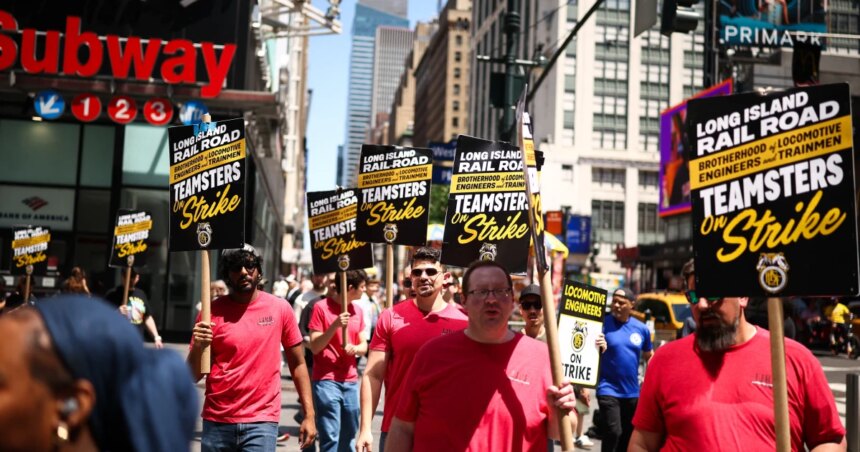
Thousands of commuters faced chaos on Long Island as they attempted to navigate their way into and out of New York City amid an ongoing labor strike that has effectively halted operations on the Long Island Rail Road (LIRR), the nation’s largest commuter railroad. This marked the third day of the strike, which began when over 3,500 LIRR employees walked off the job early Saturday morning following a breakdown in contract negotiations.
As the first weekday of the strike unfolded, it served as a significant test for the alternate travel plans put in place by the Metropolitan Transportation Authority (MTA) and local government. With more than 250,000 commuters relying on LIRR services during workdays, officials had prepared emergency measures to alleviate the potential fallout from the strike. However, union leaders indicated that commuters may need to brace themselves for an extended period of disruptions, as negotiations remained at an impasse.
Kevin Sexton, a representative from the Brotherhood of Locomotive Engineers, described the ongoing situation as emblematic of the MTA’s negotiation style, stating, “Unfortunately, from our perspective, in true MTA fashion, it’s take two steps forward, and one step back,” after talks failed once again. MTA’s lead negotiator, Gary Dellaverson, had previously criticized union representatives for seemingly lacking urgency to reach a resolution, sparking dismissive reactions from union leaders.
The disruption saw union members rallying outside prominent travel hubs, like Penn Station, chanting slogans that underscored their demands for a new contract. With a focus on wage and cost-of-living increases, the unions expressed their frustrations over the MTA’s reluctance to meet these demands, a sentiment echoed by many commuters who faced the brunt of the strike’s impact.
In response to the anticipated flood of commuters, New York Governor Kathy Hochul had advised individuals to work from home whenever possible. While some commuters followed this recommendation, many others were still left struggling to adjust their travel plans as the evening commute approached. Fortunately, Hochul later remarked that the day’s commuting experience was “smoother than expected,” crediting the cooperation of New Yorkers who adjusted their schedules accordingly.
While negotiations continued, union leaders and MTA officials remained divided. The unions, which represent various sectors of LIRR employees, accused the MTA of exacerbating the situation by walking away from discussions. They claimed the two parties were close to an agreement, with negotiations stalling due to minimal disagreements, yet MTA officials maintained that they were open to further dialogue.
Adding to the complications, Nassau County Executive Bruce Blakeman urged Hochul to consider suspending congestion pricing during the strike. This pricing, which is intended to alleviate congestion and fund public transit, has become increasingly controversial, especially as more residents are forced to lean on car travel due to the strike. Hochul countered that there are no legal avenues to pause the program, a sentiment that echoes previous objections from opponents of congestion pricing.
Before the strike, emergency transit alternatives had been outlined, including free shuttle services from select Long Island locations to subway stations in Queens. Officials also increased police presence along major commuter routes to maintain safety and order. New York City Mayor Zohran Mamdani emphasized steps being taken to reassure motorists regarding parking rates, as inspectors monitored compliance to ensure that price hikes were not imposed without proper notice.
As the labor dispute persists, local leaders are increasingly concerned about the economic repercussions of the strike, projecting losses that could amount to approximately $61 million a day as productivity dwindles across affected areas. The mounting frustrations from commuters and the economic implications of the strike highlight the urgent need for a resolution between the MTA and the striking unions, as all parties navigate the increasingly complex landscape of labor negotiations.