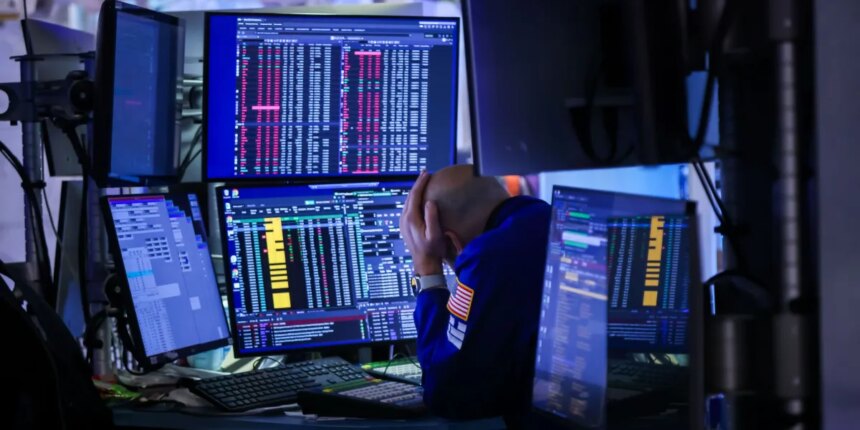
A recent warning from a leading market analyst regarding a potential “prisoner’s dilemma” in the tech sector has become increasingly relevant amid a significant selloff, even in the face of strong earnings from key players like Palantir. This caution originated from Tony Yoseloff, the managing partner and chief investment officer at Davidson Kempner Capital Management. His insights, shared during a podcast with Goldman Sachs, suggested a troubling dynamic in the artificial intelligence (AI) space, where firms are both investing in and selling to one another, creating a precarious financial environment.
Yoseloff articulated a scenario where firms may feel pressured to continue investing in AI technologies; failure to do so could leave them at a competitive disadvantage. He emphasized this situation parallels classic game theory dilemmas, where companies are compelled to follow their peers or risk falling behind. The concentration of power among a select group of ten stocks, which represent 40% of the S&P 500’s total weight, further aggravates concerns of market stability, reminiscent of historic financial bubbles.
Adding to the market’s anxiety, investor Michael Burry, renowned for his success during the subprime mortgage crisis, revealed a $1.1 billion short position against prominent AI companies such as Nvidia and Palantir. His revelation intensified fears regarding the narrowness of tech gains, prompting analysts to note that the “Magnificent 7” tech stocks contributed significantly to S&P 500 returns, underscoring the potential risk of a market correction.
The aftermath has been severe. Palantir’s stock, which had been on a remarkable upward trajectory with a 154% increase year-to-date, abruptly reversed course, plunging nearly 8% despite a promising quarterly earnings report. Asian and European markets followed suit, illustrating the interconnectedness of global sentiment tied to a handful of tech giants. In certain regions, major tech stocks accounted for a disproportionate share of national market returns, making any perceived weakness particularly unsettling.
In a subsequent interview following the selloff, Palantir’s CEO, Alex Karp, expressed frustration over Burry’s short position, defending the company’s value and emphasizing its positive contributions. Karp asserted that short sellers target companies that genuinely drive progress, and he remains undeterred by market criticism. However, following this confident rhetoric, Palantir’s stock continued to trend downward.
Despite reporting record revenues and a significant increase in government contracts, investor confidence appeared shaken, with analysts questioning Palantir’s high valuations amid substantial capital expenditures and uncertain AI returns. The company’s price-to-earnings ratio soared well above 100, raising red flags for some investors.
Karp dismissed concerns over Palantir’s strategic approach, yet the broader implications of Yoseloff’s warnings seemed validated as robust financial results failed to quell market fears. High-profile Wall Street executives echoed these sentiments, suggesting that stock valuations could see decreases of up to 20% in the near future.
As the landscape evolves, the concept of a looming “wobble” in the AI sector is coming into sharper focus. Confidence in the momentum of AI growth is proving fragile, and continued engagement in potentially reckless investments could lead to “dead capital” and stagnated tech valuations, reminiscent of prior market bubbles.
Looking ahead, seasoned investors recognize that this tumultuous period also presents opportunities. The eventual necessity for firms to differentiate between genuine market leaders and those unable to meet expectations could pave the way for “absolute return strategies” that thrive amid volatility. As the financial community navigates these challenges, the implications of recent earnings reports and market reactions could signal pivotal turning points in the AI and tech landscape.