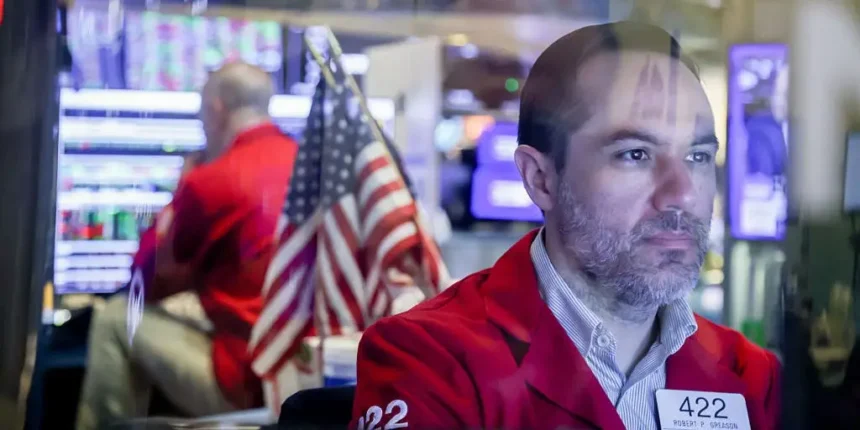
In a startling return to reality, an individual reflecting on the state of the stock market finds themselves vividly dreaming of a bullish scenario from April 2025, only to awaken and confront the complexities of the present market landscape. They note that stocks are hovering around all-time highs, seemingly unaffected by recent geopolitical tensions, such as the ongoing conflict in Iran. Instead, the focus has shifted to optimistic earnings forecasts, raising questions about the sustainability of such market conditions.
The recent history of market responses reveals striking similarities between the disruptive forces of the past two years, namely the tariff imposition by former President Trump in 2025 and the geopolitical stress stemming from the Iran war in 2026. In 2025, the S&P 500 experienced a precipitous decline of 12% within a week due to Trump’s “Liberation Day” tariffs, before recovering swiftly within a month and resuming a steady upward trajectory. In contrast, the S&P 500 fell 8% over the course of a month in response to the Iran conflict. Notably, the rebound here was quicker, occurring in just two weeks.
A deeper examination of these events reveals the persistent policy effects that influence market sentiment. The tariffs in 2025 initially sparked fears of inflation and higher consumer prices, but as the administration dialed back some of the proposed measures, these concerns eased. Conversely, in 2026, fears regarding rising oil prices and inflation initially spurred a market sell-off, but as optimism about potential peace negotiations developed, investors began to reallocate capital into equities.
The catalysts behind the market movements also offer insights. In 2025, the narrative surrounding potential interest rate cuts played a significant role in rallying investor confidence. The Federal Reserve eventually implemented three cuts later that year, complemented by a surge in enthusiasm surrounding artificial intelligence. This dual narrative provided a robust framework for sustained market gains.
Today, the narrative has shifted towards earnings growth, a historically reliable driver for market performance. Current conditions appear more favorable compared to the previous year’s rally, suggesting potential avenues for future growth. However, there are lessons to be learned from recent history regarding market resilience and the necessity of having multiple strong narratives.
One clear takeaway from the analysis is the importance of preparedness for volatility. Although the market experienced a sustained upward trend for several months following the tariff announcements, it was far from a smooth ascent. Disruptions and emerging challenges were constant. The current environment, influenced by ongoing conflicts and geopolitical tensions, suggests that further instability may loom on the horizon.
Moreover, the market’s memory of past challenges remains strong. Despite positive sentiments surrounding AI and earnings growth, a single unexpected event or disappointing forecast could significantly impact market stability. If inflation pressures resurface, it represents a potential trigger for investors to reconsider their positions, likely resulting in a market pullback.
While historical patterns may not repeat precisely, the similarities of the recent past suggest cautious optimism may not be sufficient without acknowledging the varied circumstances that could disrupt current trends. Investors and analysts alike are advised to remain vigilant and versatile in their strategies as they navigate an increasingly complex market environment.