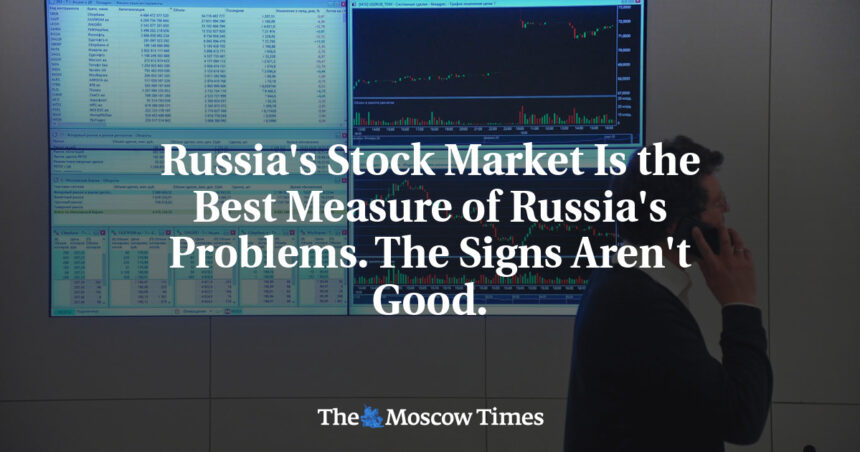
The stock market has emerged as a crucial barometer of public sentiment, presenting an unfiltered glimpse into the prevailing economic atmosphere. Just last week, the Russian stock market delivered a stark message, reflecting a loss of hope among traders regarding the country’s financial stability. This occurred amidst turbulent economic conditions, marked particularly by an unprecedented drop in the MOEX index, which experienced a 5% decline in a single day—an event without precedent in its history.
Traders, who typically engage in both optimistic and pessimistic forecasts, found their faith shaken as industrial output, initially thought to be on the path to recovery, began to falter again. Vital sectors such as oil refining and metallurgy reported significant downturns of 13.5% and 12.8%, respectively, indicating a troubling descent rather than a sustained revival. This erosion of output has led to dwindling investor confidence that companies can generate profits; without this, dividends—the primary lure for investors in Russian stocks—are increasingly seen as unattainable.
The situation was exacerbated by the Central Bank’s tepid response to the escalating economic crisis. Despite a nominal cut in the key interest rate, Governor Elvira Nabiullina cautioned that uncontrolled budget spending—primarily directed towards military endeavors—precluded any sensible fiscal strategy. Such commentary raised alarm bells, particularly as reports surfaced of mounting logistical challenges affecting civilian sectors, including transportation and goods delivery.
Fuel shortages have intensified the logistical nightmare, provoking fears of extensive supply chain disruptions. Haulage companies have warned of an imminent price surge, indicating that the financial strain will ripple through the economy. The government’s response has been marked by a return to Soviet-era regulatory measures, which many fear could compound the crisis rather than alleviate it.
Amid these developments, President Vladimir Putin’s recent public remarks were seen as further disconnect from the dire realities faced on the ground. An interview conducted as tensions escalated revealed his optimism about the economy and military situation—narratives that diverged sharply from observable trends. Analysts and traders alike expressed skepticism about whether Putin and his administration possess an accurate understanding of the challenges ahead.
In the immediate aftermath of Putin’s statements, a brief rise in the MOEX index suggested a faint flicker of optimism, but many market participants remained cautious. This uptick was likely short-lived as underlying issues persist, prompting many to predict the continuous descent of the stock market.
As the situation evolves, keen observers are encouraged to monitor the stock market closely for insights into both public sentiment and the broader state of the economy. The unfolding narrative promises to be a revealing commentary on Russia’s economic health and political leadership in these uncertain times.