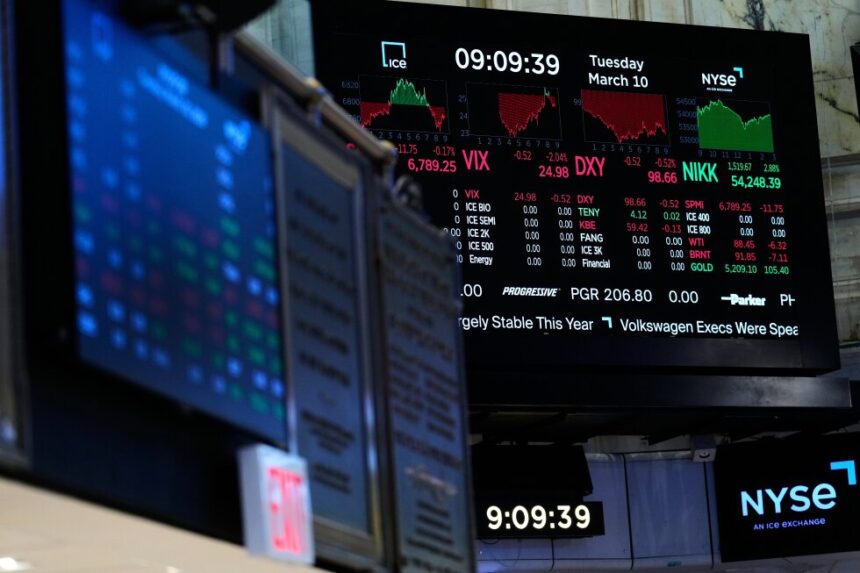
In the midst of recent turmoil in stock markets, many investors are looking for ways to safeguard their retirement savings. Historically, remaining calm during market fluctuations has proven beneficial, with the U.S. stock market demonstrating an ability to recover from its previous steep declines. The S&P 500 has rebounded from various crises, including global financial downturns, trade disputes, and military conflicts. Although these recoveries can take years, those who abandon their stock investments may miss crucial opportunities for growth during the rebound phases.
With the current volatility, market strategists remain focused on patience for long-term gains. They stress that funds not needed in the immediate future should not be invested in stocks. Anthony Saglimbene, chief market strategist at Ameriprise, emphasizes that while volatility is discomforting and may escalate further, it often represents a fleeting phase that can provide meaningful buying opportunities.
Recent geopolitical conflicts, particularly the ongoing war in Iran, have significantly impacted global oil supply and led to pronounced market fluctuations. The Strait of Hormuz, a vital artery for oil transport, has seen disruptions that have propelled oil prices close to $120 per barrel. Analysts warn that, if these production issues persist, prices could soar to $150, potentially triggering “stagflation,” a scenario characterized by stagnant growth and high inflation that poses challenges for central banks worldwide.
Despite these market swings, the S&P 500 remains relatively close to its record high, standing just 4% below the peak achieved in January. The market’s volatility has manifested in sudden, dramatic shifts in stock prices, sometimes rebounding sharply after significant losses within the same trading day.
While market corrections—defined as declines of at least 10%—are common and typically serve to recalibrate overreaching optimism, investors face a fundamental question: should they sell their stocks during downturns? Moving investments to bonds may shield against severe drops, but timing the market correctly is notoriously difficult. Furthermore, selling at low points risks missing subsequent recoveries. For instance, recent trading sessions showed how those who exited the market prematurely could miss gains on rapidly recovering days.
For new investors, the accessibility of trading apps has ushered in a younger generation eager to engage with the stock market, often with the luxury of time on their side. This younger demographic can thus weather market lows, perceiving price drops as buying opportunities.
Conversely, older investors and retirees must navigate these conditions with caution. Those nearing retirement may consider reducing spending or withdrawals to preserve their investments for extended periods. Even those with pensions may remain relatively insulated from market fluctuations but should still be aware of their overall investment strategy.
As market conditions change, traditional safe havens such as Treasury bonds and gold have faced their own challenges, complicating the investment landscape. With uncertainty looming over how long the current volatility will persist, financial experts urge investors to remain cautious yet optimistic, preparing for fluctuations while staying focused on long-term strategies.