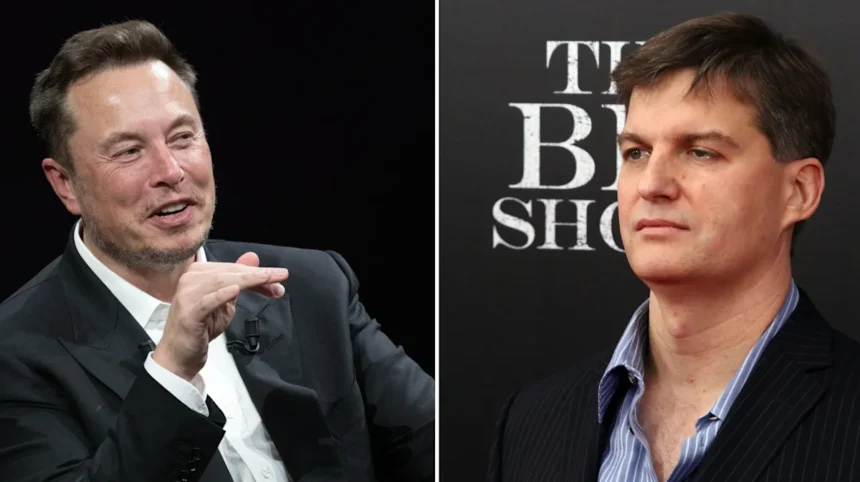
SpaceX’s recent stock-market debut has resulted in a remarkable milestone for CEO Elon Musk, who has reportedly become the world’s first trillionaire. However, this valuation has drawn skepticism from various corners, especially from notable investors like Michael Burry, known for forecasting the U.S. housing market collapse prior to the 2008 financial crisis.
In a recent Substack post, Burry indicated he has no plans to invest in or bet against SpaceX, despite analyzing several put options that would allow for a downward bet on the company’s stock. Put options, which grant the holder the right to sell shares at a predetermined strike price before an expiration date, can provide significant profits if the stock falls below that price. Currently, a December 2028 put option with a $100 strike price was trading at about $25, while options expiring in June 2027 and December 2026 were valued at $13 and $6.75, respectively. Despite being tempted by the December 2026 option, Burry declined to move forward, expressing hope that SpaceX’s stock would stabilize around the mid-$200s range.
Following its much-anticipated debut on June 12, SpaceX shares have fluctuated between $190 and $200. A buy-in for options with a $100 strike price would imply Burry believes the stock could plummet by more than 50%. Despite his bear-esque investing reputation, Burry clarified that he currently holds no position in SpaceX, neither short nor long.
Burry’s reputation for contrarian investing is well-documented. Recent filings showed his hedge fund purchased millions of put options on notable companies such as Palantir and Nvidia, both of which have experienced significant upward trends in the market. His reluctance to engage with SpaceX, however, stems from his skepticism regarding the company’s nearly $3-trillion market valuation, which he describes as disproportionate for what he perceives as a fundamentally small space firm. He further criticized the valuation, suggesting it could buy out a significant number of the world’s wealthiest individuals and still have a trillion dollars left over.
SpaceX initially launched its IPO at a price of $135 per share, successfully selling over 555 million shares and raising approximately $75 billion, marking it as the largest IPO in history. Despite initial excitement, questions arose when SpaceX’s stock experienced its first decline after three consecutive days of increases, challenging the sustainability of the stock’s initial frenzy.
Elon Musk remains optimistic, asserting in a post on social media platform X that he envisions SpaceX could achieve $1 trillion in revenue by 2030. Yet, Burry’s skepticism extends beyond SpaceX, as he draws parallels between the current hype surrounding artificial intelligence stocks and the infamous dot-com bubble of the late 1990s, suggesting that investor enthusiasm may be outpacing traditional economic indicators.
As discussions surrounding SpaceX’s valuation continue to unfold, Burry’s insights highlight the ongoing debate about the viability of high valuations in an increasingly speculative market.