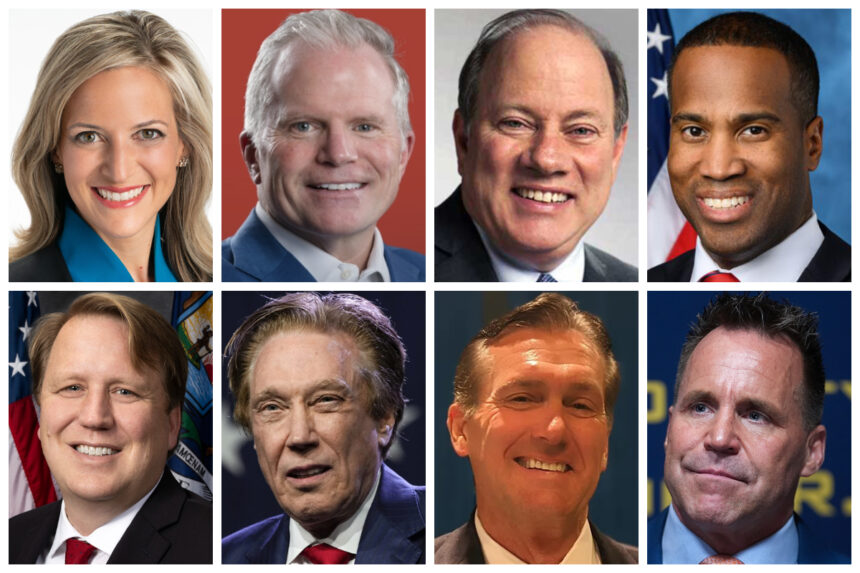
Michigan’s recent gubernatorial candidates’ personal financial disclosures have spotlighted significant financial narratives amidst a backdrop of proposed transparency. Under a new law enacted this year, candidates for the state’s highest office were required to submit their disclosures by a specified deadline, marking a first since voters endorsed a constitutional amendment in 2022 aimed at enhancing transparency among public officials.
Among the candidates, Republican Ralph Rebandt attracted attention by revealing a substantial Bitcoin gift valued at $800,000. Rebandt, who is also a pastor, noted that he received this gift from a longtime friend, which he characterized as “unearned income” on his disclosure form. He later invested a large portion of this gift—$795,000—into his own campaign, stating that he was motivated to support his candidacy after depleting his retirement savings during a previous campaign attempt.
In an interview, Rebandt refrained from identifying the source of the Bitcoin gift but explained that it significantly aided his campaign financing shortly after announcing his candidacy. Even as he emphasized his commitment to transparency, observers expressed concerns over potential ethical implications arising from such a substantial and unexplained financial gift. Bob LaBrandt, an expert in Michigan campaign finance, remarked that the situation raises questions about the integrity of funding and the lack of public scrutiny surrounding large personal donations.
Out of the nine candidates vying for the governorship, only three, including Rebandt, chose to disclose specific monetary values in their financial reports. Fellow Republican Mike Cox reported over $8.4 million in investments, while Democrat Jocelyn Benson detailed her financial situation, which included a $112,400 salary as secretary of state and additional income from her book, alongside significant assets held jointly with her husband.
However, the overall reaction to the new disclosure law has been mixed, with critics labeling it inadequate due to perceived loopholes that allow candidates to provide minimal information. The law was criticized for lacking robust measures to reveal potential conflicts of interest, prompting calls for more stringent transparency requirements.
Cox, who underscored the importance of transparency in leadership, expressed confusion over why other candidates had not been as forthcoming with their financial details. Rebandt’s report included a modest income of $60,000 from his pastoral work, along with Social Security benefits, contrasting with the affluent disclosures of some competitors.
While some candidates provided only minimal information, such as Republican John James, who listed several properties and reported receiving dividends from multiple financial vehicles without disclosing specific values, others were more forthcoming. Democrats, including Benson and independent candidate Mike Duggan, reported salaries and established spending in their disclosures.
Despite mixed compliance details, the Michigan election landscape continues to evolve, with candidates utilizing varying approaches to financial transparency as they prepare for the upcoming elections. This newfound mandate for financial disclosures may also lead to greater public scrutiny of the candidates’ financial histories and their implications for governance moving forward.