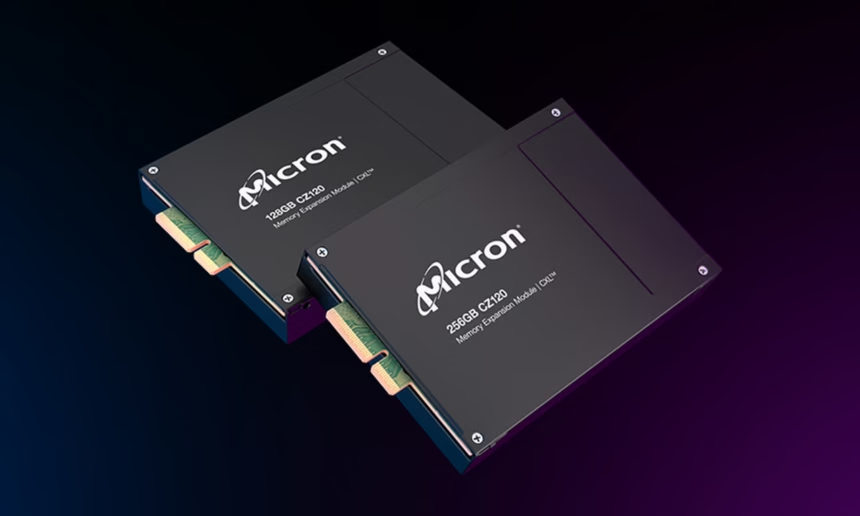
Micron Technology has experienced a remarkable surge in its stock price, with shares increasing nearly 150% in 2026. Initially driven by a recovery in the memory cycle, Micron’s ascent has morphed into a structural re-rating due to burgeoning demand from the artificial intelligence (AI) sector, particularly for high-speed memory.
As investors eye the sustainability of this rally, two key factors warrant attention that could further enhance the stock’s trajectory despite prevalent AI infrastructure advantages already being factored in.
### Key Drivers Behind Micron’s Surge
The primary catalyst propelling Micron’s stock is escalating demand for high-bandwidth memory (HBM) and advanced DRAM from major AI data centers, particularly those operated by tech giants such as Microsoft, Alphabet, Amazon, and Meta Platforms. These companies are rapidly developing GPU clusters that are consuming virtually all of Micron’s HBM output, with the company’s entire 2026 HBM capacity reportedly sold out under long-term, fixed-price contracts.
This situation of heightened demand has granted Micron significant pricing power, a noteworthy shift in a market traditionally characterized by oversupply. Recent data from TrendForce indicates that DRAM prices have surged between 58% and 63%, while NAND flash prices have risen even more sharply, by 70% to 75%, in recent months.
As the market begins to recognize memory not merely as a commodity but as an essential component in the AI chip value chain, it is anticipated that Micron’s stock may continue to sustain its rally.
### Overlooked Tailwinds for Continued Growth
Beyond the immediate HBM demand narrative, two less-discussed advantages could also bolster Micron stock.
First, the issue of supply chain security amid geopolitical tensions is increasingly coming to the fore. Many American hyperscalers and government-associated AI initiatives are prioritizing domestic or allied suppliers for critical components. In this context, Micron stands out as the only U.S.-based manufacturer of advanced DRAM and HBM. This status could translate into more preferred supplier contracts and increased support under the CHIPS Act, alongside providing insulation from risks associated with Asian supply chains. Such advantages are likely to grow as developers seek alternatives to concentrated foreign supply.
Second, Micron is quietly expanding its total addressable market (TAM) beyond the traditional big tech training clusters into AI inference and edge computing applications, as well as consumer electronics. AI-specific PCs and smartphones, robotics, wearables, and autonomous vehicles all require significant memory capacity and bandwidth. This diversification into emerging sectors could counterbalance the volatile capital expenditures typical of cloud service providers. Furthermore, NAND-based solid-state drives (SSDs) are gaining traction for AI storage and inference workloads, a sector still not fully recognized by many investors.
In summary, with HBM and DRAM supply constraints persisting alongside these two underrated secular tailwinds gaining traction, Micron stock appears positioned for considerable upside for investors willing to look beyond the mainstream AI themes. The prevailing sentiment indicates that the memory supercycle is poised not to taper off but rather to enter a more durable phase.