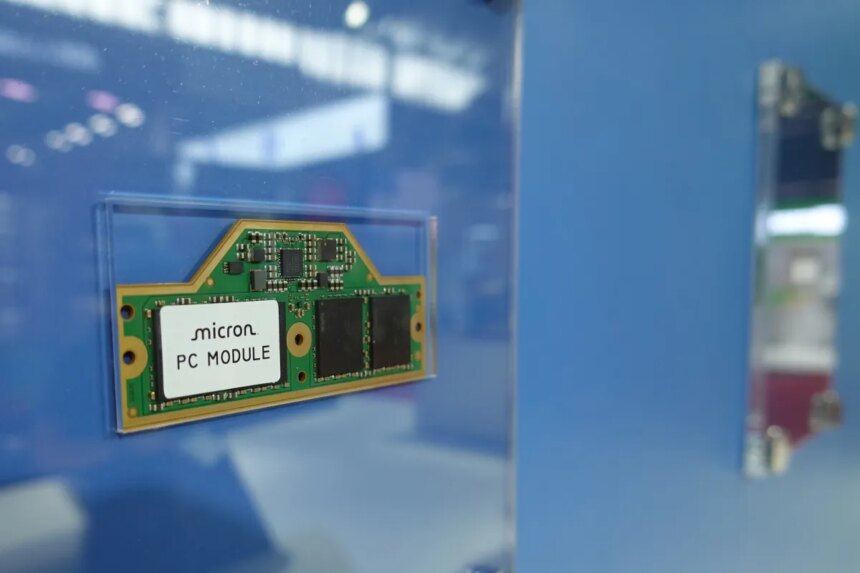
Micron Technology, the memory chip manufacturer based in Boise, Idaho, has seen a remarkable surge in its market value, fueled largely by the explosive growth in artificial intelligence (AI). This increase has led to speculation about whether this trend will continue, particularly as demand for memory chips driven by AI applications seems to be outpacing supply.
The company’s impressive performance was highlighted when it briefly surpassed the market valuations of tech giants Meta and Tesla, although it later settled back to more closely align with their financial standings. As of the close of trading on Friday, Micron had a market capitalization of approximately $1.27 trillion, with Meta and Tesla standing at $1.39 trillion and $1.42 trillion, respectively. The stock price for Micron has soared more than 236% over the past month, closing at $1,132 a share, a significant rise from its sub-$100 valuation that persisted for years prior to mid-2025.
Historically, consumers have associated Micron with memory cards that enhanced the storage capabilities of devices such as PCs and smartphones. However, the company is currently reaping the benefits of a booming demand for memory chips, particularly High-Bandwidth Memory (HBM), required by AI-powered data centers. This trend has created a significant supply crunch, with many AI system developers and large tech firms like Nvidia, Microsoft, and Google purchasing vast amounts of memory to support their growing infrastructures.
The ongoing shortage—termed “RAMageddon”—is expected to persist into 2027, affecting the availability and pricing of consumer electronics, including products from leading brands like Apple and Xbox. In its recent third-quarter earnings report, Micron articulated the impact of this trend, reporting a year-over-year revenue increase to $41.45 billion and a profit leap from $1.88 billion to $28.2 billion. The company also projected fourth-quarter revenues between $49 billion and $51 billion, further solidifying confidence among investors and analysts.
One of the persistent challenges for memory chip manufacturers has been the lengthy and costly process of scaling up production capacity, often leading to supply gluts when demand fluctuates. To mitigate potential downturns, Micron has proactively established a series of long-term supply agreements with key players in the industry, including strategic partnerships with Nvidia and the AI lab Anthropic. These agreements are expected to transform its business model and instill confidence in its future stability.
Tech analysts largely view Micron as a viable long-term investment. One analyst from William Blair underscored that the demand for memory continues to grow at a rate that surpasses the availability of new production capacity, suggesting a strong outlook for sustained price increases and revenue growth.
While doubts remain about Micron’s ability to navigate potential market fluctuations in the future, its brief moment as a market leader among tech giants points to its growing importance in the rapidly evolving landscape of AI technology and memory chip manufacturing.