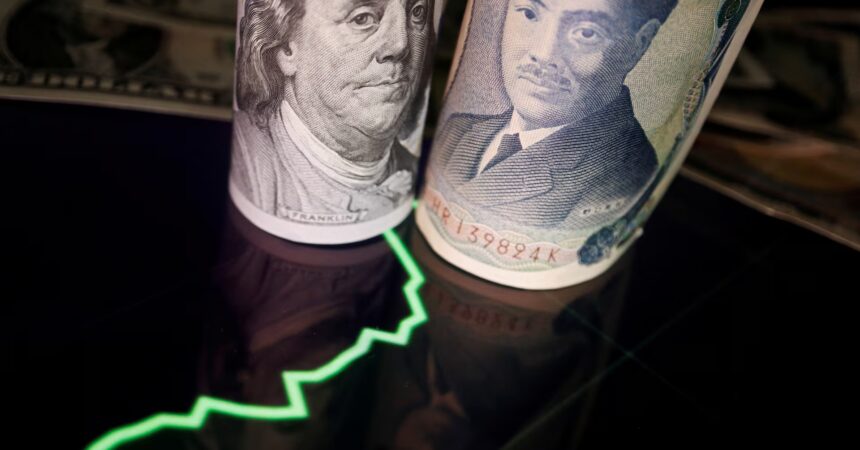
The New York Federal Reserve recently conducted rate checks on the dollar/yen currency pair, a move that has analysts speculating potential intervention from U.S. and Japanese monetary authorities in the ongoing strength of the dollar against the yen. According to sources familiar with the matter, these checks occurred around midday on a recent Friday, leading to a notable decline in the U.S. dollar’s value relative to the Japanese yen.
The dollar experienced a sharp drop, moving from approximately 157.50 yen to a four-week low of 155.66 yen in the afternoon, and settling at 155.85 yen—a 1.6% decrease. The New York Fed’s activities are part of its role as a fiscal agent for the U.S. Treasury, aiming to gauge market conditions by querying dealers about potential transaction prices.
Traders have been particularly cautious of potential intervention by Japanese authorities as the yen hovered near the significant threshold of 160 per dollar. The situation has been heightened by market sensitivities regarding currency levels, leading some analysts to interpret the Fed’s rate checks as a precursor to possible action.
The actual occurrence of any intervention could become clearer following the release of data by the Bank of Japan, scheduled for Monday at 1800 JST (0900 GMT). While U.S. authorities stepping into what has primarily been a Japanese concern is not the norm, history shows that such actions have occurred under specific circumstances.
Market participants will be closely monitoring the developments in the dollar/yen exchange rate, as further indications of intervention from either the U.S. or Japan could significantly impact currency trading strategies.