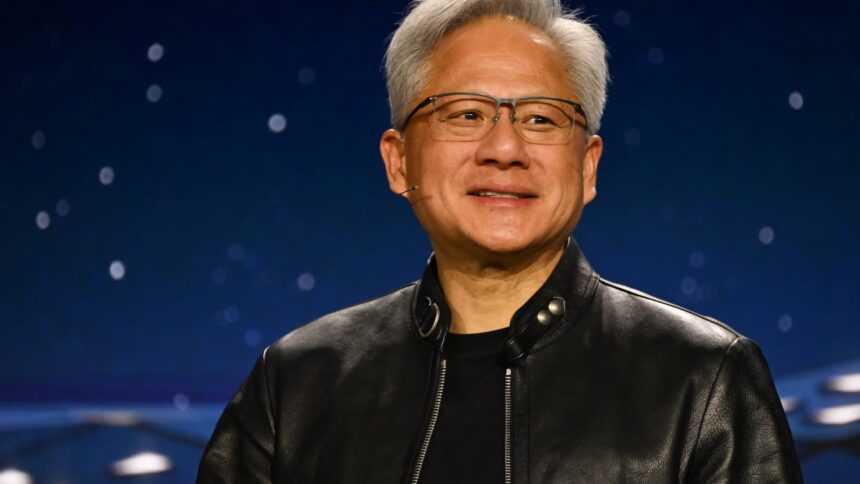
Nvidia made headlines at Computex by introducing its first-ever PC processor, developed in collaboration with Microsoft. This new chip utilizes the Arm instruction set, marking a strategic move to compete against x86 architecture, which has long been dominated by Intel and AMD. Nvidia claims traditional chips are inadequate for its vision of AI-driven PCs due to their inefficiencies in power usage and thermal performance. Following the announcement, Intel and AMD saw a dip in their shares, while Nvidia’s stock experienced a modest increase of 2%.
During his keynote address, Nvidia CEO Jensen Huang emphasized that the value of compute is paramount in the AI landscape. He criticized companies like Google and Amazon for opting for cheaper custom data center chips, arguing that such choices do not yield profitable results. According to Huang, the real measure in data centers is the number of profitable tokens generated per watt of power consumed.
The outcome of Nvidia’s new PC strategy also appears beneficial for Arm Holdings, which licenses its intellectual property for Nvidia’s chips. As a result, Arm’s stock surged by 11% in premarket trading and has tripled in value over the year. Analysts from Mizuho and Wells Fargo have raised their price targets for Arm significantly, now estimating values at $425 and $410, respectively.
In related industry news, Goldman Sachs increased its price target on Dell from $230 to $500, while maintaining a buy rating after Dell’s impressive quarterly results. Morgan Stanley also upgraded its rating on Dell from sell to hold, admitting that their previous concerns over a memory shortage were misplaced. Dell’s close partnership with Nvidia on AI servers and PCs further illustrates the growing synergy between the two tech giants.
Berkshire Hathaway recently agreed to acquire Taylor Morrison Home for $6.8 billion, indicating potential value in the often-criticized homebuilding sector. The market reacted positively as Taylor Morrison’s shares increased by over 22%, even as Berkshire’s shares slipped slightly.
Looking ahead, several anticipated IPOs for 2026 and possibly 2027 are becoming key talking points, including those of SpaceX, OpenAI, and Anthropic. Insights shared in a recent column hint at a strategic analysis drawn from past IPO experiences and a preference for one of these offerings.
In cybersecurity, Baird raised its price target on Palo Alto Networks from $265 to $300 ahead of its Q3 results, while CrowdStrike is expected to report on Wednesday. Both companies have reached new heights, benefitting from broader market recognition of AI’s supportive role in cybersecurity rather than a threat.
Software stocks are also witnessing a revival, with Salesforce, ServiceNow, and Adobe showing significant premarket growth. Huang’s assertion at Computex that AI enhances, rather than undermines, software utilization has resonated with investors.
In the consumer tech sector, Citigroup maintained an “incrementally positive” outlook on iPhone shipments for 2026, reaffirming a buy rating on Apple, coupled with a price target of $315. This development suggests limited upside for Apple, whose stock is currently hovering around $312, especially ahead of its upcoming WWDC developer conference.
Lastly, in notable divestiture news, Yum! Brands is reportedly in exclusive negotiations to sell Pizza Hut to LongRange, while Kontoor has agreed to sell its Lee jeans division to Authentic Brands for up to $1 billion. Yum’s stock climbed by about 1.5%, in contrast to Kontoor’s decline of over 2%. The sale of Pizza Hut aligns with Yum’s earlier indications that divesting the brand was a possibility.
This latest wave of developments reveals the dynamic shifts within the tech and consumer sectors, as companies adapt to emerging trends and market demands. Investors are closely monitoring these shifts as they look for opportunities moving forward.